
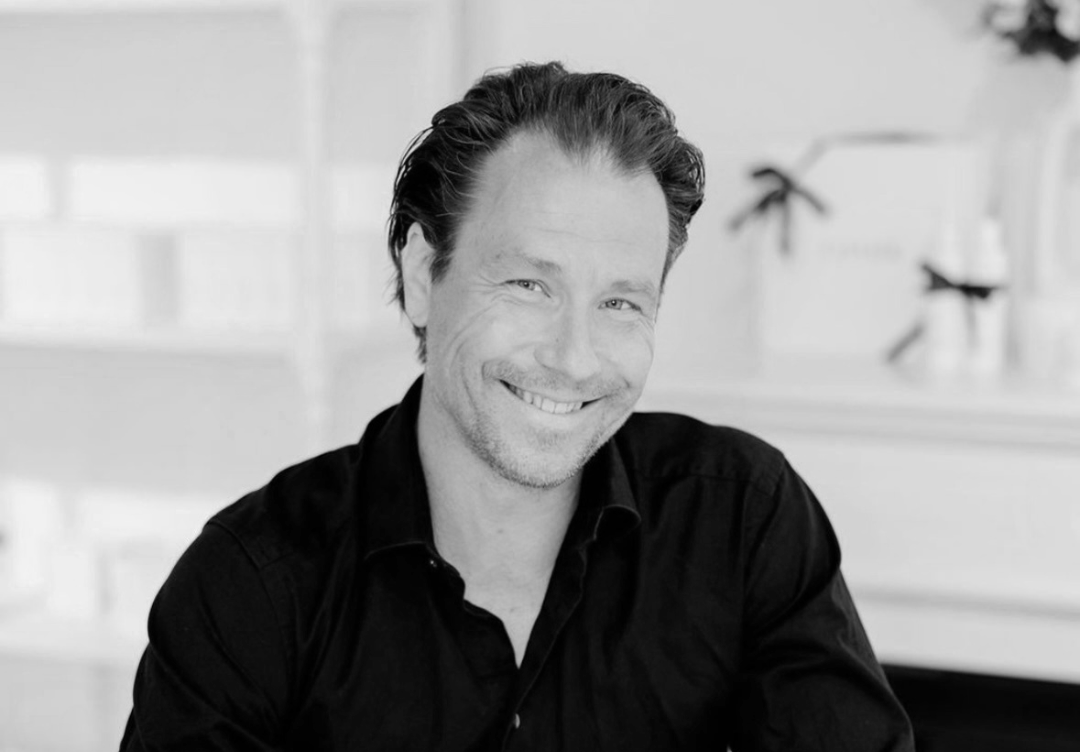
100 innovations that can transform beauty: As a founding member, Petro Lahtinen transformed the global packaging industry with Sulapac. Can he do it again with Lavliér’s wood-based skincare ingredients?
Lavliér has been selling cosmetics for a few years now. Mainly, co-founder Petro Lahtinen explains, to get to know the market. Now, the company is ready to disrupt the industry with its brand-new innovation, a haircare range first launched at Northern Europe’s biggest beauty event, the I love me beauty fair, in Helsinki the other week.
– It’s our first cellulose-based products, he says. It consists of a new raw material, a cellulose gel, and together with a formulation strategy and idea, they form a technology called Chem-less. So it’s not only the raw material, but how you use it and where you use it. It’s aimed at saving energy and reducing raw material consumption in large-scale industrial cosmetic manufacturing. In small-batch production, the main benefit is a simpler process, but when you’re in a big factory making hundreds of tons of products, it really starts to pay off.

Cellulose as a raw material is readily available, renewable, and the price is quite low due to a vast ecosystem built around utilising it in other applications.
– It’s not a new material that comes from some exotic flower, but just basic wood. People build houses from the same raw material. For cosmetics, that gives a huge opportunity for high markups because the raw material is cheap, and the technology that we are utilising aims to reduce energy consumption and raw materials, which also saves costs.
– Typically, I would say most sustainability innovations are more expensive, and people try to justify why you should pay more to save the planet. We, on the other hand, have the opportunity to help brands and manufacturers save money, and for consumers who want to be more sustainable, this reduces the chemical burden on skin and the environment.
Can it replace fossil-based alternatives?
– Obviously, those are on the list to be replaced as soon as possible. But there are also renewable and plant-based products that have ethical issues. Some come from third countries. I’ve seen reports that child labour is involved in picking some raw materials. And typically, most of the plants that are used in cosmetics compete with food production.
– The wood industry doesn’t compete with food production, so it’s ethically more sound to use these kinds of materials.
Have you developed it yourself or together with scientists?
– We are the first to commercialise this. The roots go back about twenty years in Finnish academic research. I think several universities have been working on the same subject and developing cellulose-based gels and other raw materials. Now, the time is right, and the technology is ripe for commercialisation. Actually, it was our invention. We have a patent application for utilising the gel in cosmetic applications. Originally, it was intended for thickening paints, replacing glass fibre products, and other, more industrial applications. It was my friends from the university, when I was doing my PhD, and my colleague was working with this, so that was where I remembered the raw material. We got the idea to utilise it this way in cosmetics.
Can you share more about this vast Finnish ecosystem around cellulose? The forest companies have invested heavily in new innovations in textiles and personal care. When people buy fewer magazines, they need to make money from other things. That’s my impression.
– That’s exactly it. I think it’s a role model for Norway, Sweden, Canada, and Brazil as well. Paper consumption is going down. Packaging consumption is slowly growing because of international e-commerce and people shipping stuff more than ever, but it’s still not compensating for the decline in newspaper and normal print paper sales. So, it’s really important for the forest industry as a whole to come up with other solutions and other applications for the raw material. But at the same time, it’s also important for the planet because we need to replace fossil oil. We have to come up with alternatives.
How big is the ecosystem? Can you share an overview?
– We have three major forestry companies involved: Metsä Group, Stora Enso, and UPM. I think at least in Finland, all the universities are somehow involved in active academic forest-based research. The Uusi Puu program displays most of the innovations, although not all of them, in that field. There are even more companies that are not in the program. All in all, if you consider the size of Finland, there are quite many companies developing new approaches.
– Everybody is more or less thinking about the same thing, at different paces, and with different risk levels, and is coming out with new applications. Also for textiles, of course: to replace cotton with wood-based fibre.
Back to Lavliér. You talk about ‘an ultra-minimalistic routine.’ Can you share the secret?
– Our raw material enables us to make really minimalistic products. We have, for instance, developed perfumes that don’t have alcohol at all, and no preservatives. There’s only the essential oil and our cellulose gel in it. You cannot really make a more minimalistic fragrance than that. At the same time, we can make creams with only a few carefully selected moisturizers, such as shea butter and almond oil. We just mix those with our gel base, and you have a commercial product.
– I don’t think there are many technologies that can offer the same thing at the moment, and that can be scaled to a global level. I know that there are materials that can do the same, but they are highly expensive and cannot satisfy global demand.
You’ve touched upon it, but what’s the reason it’s so cheap?
– It’s just due to the high volume of the forest industry. Timber is produced in millions of tons. Cardboard is produced in millions of tons. If you take the side stream from that, it’s enough to make soaps for the whole planet.
And it’s great timing with the EU’s restrictions on microplastics.
– It is. We have several sites that have been built so people can avoid microplastics and plastic-based raw materials in cosmetics as well. In that sense, we are really current.
You also have a B2B business, Chem-less Technologies Oy, selling the cellulose gel to beauty and personal care brands, aiming to replace the additives used in cosmetics with a base derived from wood. What else can you say about it?
– At the moment, we cannot really share anything, but we have been discussing it with major brands, and the idea resonates really well. We are actually at the point where we need to start making some choices. Since we are a small company, we cannot start working with everybody.
Have you conducted an LCA and compared your option, how sustainable it is compared to others?
– That’s a question of funding, because the LCA and EPD (Environmental Product Declaration) cost about 100,000 euros to produce. So we have not been able to do that officially. We have made unofficial calculations, so we know that basically it’s better, and the sanity check has been made, but we don’t have the documentation. At the same time, all the regulatory work and developing new products are so expensive.
This is not your first venture connected to the Finnish forest.
– No, it’s my fourth. I have five companies, but one is making boat fenders. I’m an enthusiastic boater, so I came up with a new boat fender, and we have that kind of company.
And Sulapac, are you still part of it?
– I’m not operational. I sold my shares several years ago, so I’m not involved, but I was in the founding group.
What have you learned about the Finnish forest and its potential throughout these years as an entrepreneur?
– I’ve learned that the Finnish forest offers a huge opportunity, and at the same time, I’ve learned that the patience and time span of investors don’t match the slowness of scientific development. That’s what I’ve been struggling with personally: how to combine the huge opportunity that awaits with the fact that investors would like to have a profit in six months.
– That’s something I’ve been talking about in the EU, with MEPs in Strasbourg, and members of parliament here in Finland as well. I’ve tried to lobby for the idea that if we make small investments now, they will pay off for the next generation. That’s the mission I’m still on.
The status quo is that it’s difficult to scale an innovation, but you need proof of concept to be able to scale it.
– Because you need to take baby steps first. It doesn’t make sense to scale the first version of anything you’ve made. The technologies will grow, and the products will become better and better.
And the oil companies have had 75 or 80 years to develop polyester or fossil-based fillers for personal care.
– It’s almost impossible to compete with it because it’s such a mature technology. We need patience!
Petro Lahtinen’s extra industry insights
– Deeper collaboration with startups and corporations is always welcome. Especially the kind of collaboration where startups can innovate, and corporations let startups innovate but provide industry requirements and points of view, and in the end provide a platform for scaling the innovations. Quite often, it happens that startups have some misunderstanding of what the industry needs or can utilise, and vice versa; corporations sometimes suffocate innovations by bringing too many and too early corporate processes into the equation.
Words: Johan Magnusson
100 innovations that can transform beauty, #1: Watch this space: a next-gen refill solution is here
100 innovations that can transform beauty, #2: Enzymes reshape plastic recycling as we know it, here’s how
100 innovations that can transform beauty, #3: Seaweed beauty packaging innovation is only weeks away from launching, on an industrial scale
100 innovations that can transform beauty, #4: How this new lightweight liquid package can transform refill solutions for beauty and personal care brands
100 innovations that can transform beauty, #5: How to create fibre-based closures at cost parity with plastic alternatives
100 innovations that can transform beauty, #6: What if recycling of plastic and polyester didn’t turn them into lower-grade materials?