
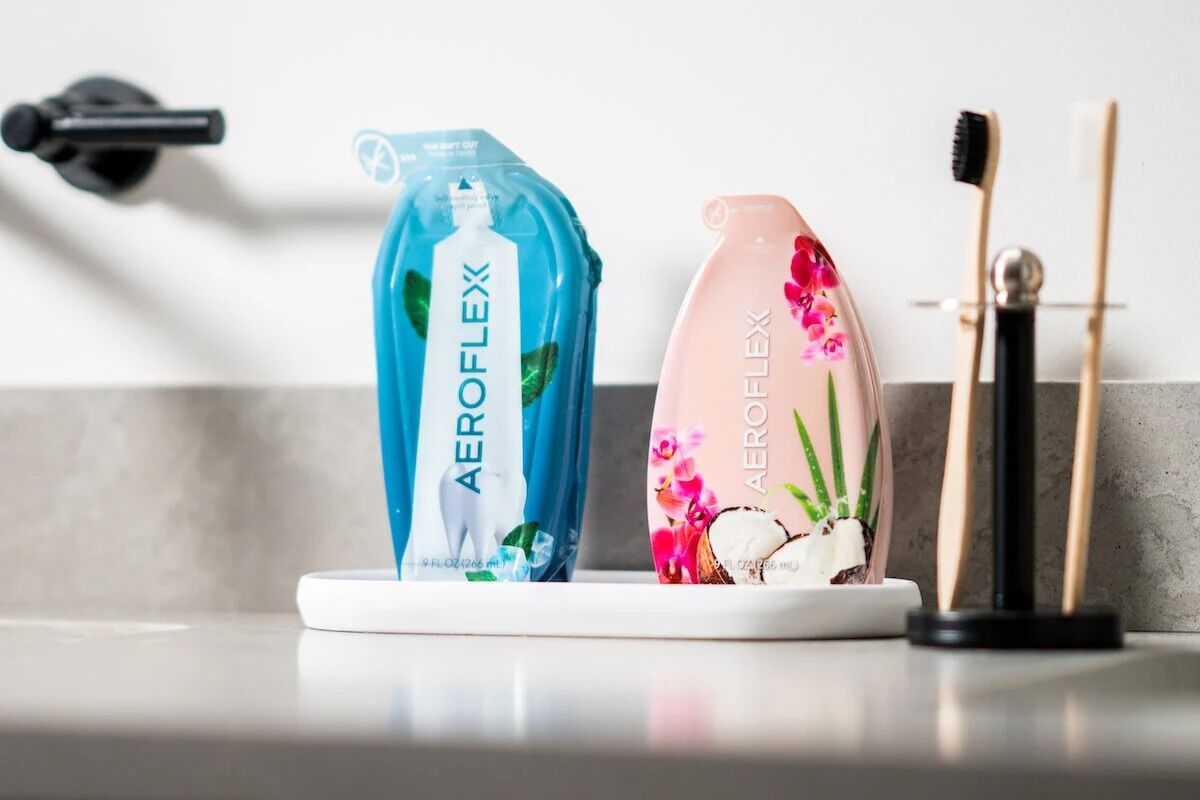
100 innovations that can transform beauty: Delivering the material efficiency and transportation benefits associated with flexible packaging while maintaining the structure, stability, and usability consumers typically expect from a bottle.
The direction of the market is clear, Peter Messacar, VP of Commercial & Business Development, AeroFlexx, states.
– Packaging, he says, has to look good, work well, and fit naturally into—and preferably enhance—consumers’ daily lives.
The company, AeroFlexx, is a packaging technology company focused on rethinking how liquid products are packaged, dispensed, and delivered.
– We have developed a proprietary packaging platform that combines key advantages of flexible and rigid formats in a single solution.
– At the centre of the platform, Messacar continues, is the AeroFlexx Pak, a lightweight liquid package designed to replace traditional rigid bottles. It delivers the material efficiency and transportation benefits associated with flexible packaging while maintaining the structure, stability, and usability consumers typically expect from a bottle.
– A critical part of the design is the airframe, which surrounds the product chamber and helps the package maintain its shape and performance throughout use, collection, sortation, and recycling. Another key innovation is the integrated self-sealing valve. Once the tear tab is removed, the valve opens when the package is squeezed, allowing controlled, dose-by-dose dispensing. When pressure is released, the valve closes automatically, helping prevent leaks and spills without the need for a traditional cap, pump, or closure.
– Taken together, these features create a new packaging format that can improve the consumer experience, support brand differentiation, and advance sustainability goals.

The uniqueness of it, if you ask Messacar, is that it is not just an incremental improvement to existing packaging. It is a fundamentally different format that rethinks how liquid products can be delivered.
– For years, brands have largely had to choose between flexible pouches and rigid bottles. Flexible packaging offers material efficiency and lower transportation impact, while rigid packaging provides structure and a familiar dispensing experience. AeroFlexx brings those benefits together in a single format, reducing the trade-offs that have traditionally existed between performance and efficiency.
– The result is a package that delivers the usability consumers expect while using significantly less material than a conventional rigid bottle. It also gives brands more freedom in shape, size, and design expression, along with a simplified packaging system.
AeroFlexx can deliver a new kind of experience, for brands as well as consumers.
– From a consumer standpoint, the experience is intuitive and convenient. The package is opened by tearing off the tab and dispensed with one hand. The self-sealing valve helps deliver controlled dosing and reduces the risk of drips, leaks, and mess.
– For brands, AeroFlexx offers a strong visual impact through customizable shapes and 360-degree design capabilities. It can also simplify the overall package supply chain by eliminating components such as caps, lids, labels, and moulds, which can help reduce cost, complexity, and time to market.
– From a sustainability perspective, it’s designed to reduce plastic at the source, utilise recycled content, and align with recycling systems where plastic bottles are accepted. Together, these attributes position us as a new liquid packaging platform for beauty and personal care brands looking to combine performance, design, and sustainability.
For refills, many suppliers state the need for thick, rigid plastic in order for the packaging to last, also when refilled, say, the third or fourth time. Your solution works the other way around, offering really light options, although claiming the same properties as conventional plastic. What’s your view on this?
– Many refill systems are built around the idea that the primary container must be rigid and durable enough to be reused multiple times. That is one valid approach, but it is not the only one.
– We take a broader view of the opportunity. Our pack can serve as a premium refill option, but it can also function as the primary package itself. That is an important distinction, because most conventional refill formats are not designed to replace the bottle.
– When used as a refill, it offers brands a lightweight, efficient alternative to traditional rigid refill packaging. When used as the primary package, it gives brands the ability to move beyond the conventional bottle while still delivering structure, dispensing control, and a premium consumer experience.
– Our view is that the market does not need a single refill model. Brands need flexibility. Some will want a refill format that works alongside an existing package, while others will want a solution that can serve as the primary package from the outset. AeroFlexx is designed to support both approaches.
More generally, what’s your view on the current state of refills and plastic recycling? From the outside, it seems like quite a mess!
– The global landscape for refills and plastic recycling is complex and still evolving, Messacar explains. Different regions are moving at different speeds, regulations continue to develop, and the infrastructure and consumer behaviours needed to support these systems are not yet consistent across markets.
– From our perspective, progress is most meaningful when it focuses on three priorities. The first is source reduction, which lowers the total amount of plastic entering the system. The second is the ability to incorporate recycled content, which helps strengthen recycling markets and provide a truly circular package option. The third is designing packaging for recyclability, supported by credible validation across collection, sortation, reprocessing, and end markets.
– We work to align with those priorities. The AeroFlexx Pak is a mono-material design intended to significantly reduce plastic at the source compared with a traditional rigid bottle, while also supporting the use of recycled content and recyclability. It can function both as a primary package and as a premium refill option, giving brands flexibility as regulations, infrastructure, and consumer expectations continue to evolve.
Beauty routines can often get messy, especially during busy mornings or in the shower. From an industry perspective, how important is it for packaging innovation to focus on balancing aesthetics and consumer functionality?
– Increasingly important. In beauty and personal care, packaging is expected to do more than look premium on shelf. It also needs to perform well in real, everyday use.
– Consumers want packaging that feels elevated and aligned with the brand, but they also expect convenience, control, and ease of use. That is especially true in moments where routines are fast-paced or environments are less controlled, such as in the shower or while getting ready in the morning.
– For the industry, this means packaging innovation must balance visual appeal with practical functionality. Strong design can attract attention and reinforce brand identity, but usability plays a major role in satisfaction and repeat purchase. Features such as intuitive opening, controlled dispensing, and mess reduction are becoming more important as brands think about the total consumer experience.
More generally, looking across beauty and personal care, one of the most important shifts is the continued evolution of retail and distribution channels.
– Brands are navigating a more fluid balance between direct-to-consumer, e-commerce, and physical retail as consumer behaviour changes.
– Online discovery remains highly influential, but physical retail continues to matter because consumers still value product trial, personalisation, and in-store experience. At the same time, packaging regulations are becoming more important in shaping how brands design, source, and distribute products across regions.
– Executives increasingly have to balance regulatory compliance with sustainability expectations. Governments are introducing stricter requirements around recyclability, labelling transparency, and material use, while consumers are demanding more visible progress on plastic reduction and responsible packaging.
– Another key shift is the role of material innovation. Advances in mono-material structures, post-consumer recycled content, and alternative package formats are creating new ways for brands to reduce environmental impact without compromising product protection or user experience. Together, these trends are reshaping how beauty companies approach innovation, compliance, and consumer trust.
And for you, what’s next? What do you have coming?
– We see strong interest from beauty and personal care brands looking for packaging solutions that combine sustainability, functionality, and premium design, as evidenced by our recent announcement with Aveda (where the first products will roll out in early 2027, Ed’s note). Our focus is on continuing to work with brand partners to bring AeroFlexx to market and demonstrate how alternative packaging formats can succeed in this category, Messacar explains. He adds:
– More broadly, we believe adoption will continue to expand as brands look for packaging that can reduce material use, support evolving sustainability goals, and still deliver a high-quality consumer experience.
100 innovations that can transform beauty, #1: Watch this space: a next-gen refill solution is here
100 innovations that can transform beauty, #2: Enzymes reshape plastic recycling as we know it, here’s how
100 innovations that can transform beauty, #3: Seaweed beauty packaging innovation is only weeks away from launching, on an industrial scale