
100 innovations that can transform beauty: Sustainability plus performance is a combination everyone in packaging is looking for. Brands are accelerating their move away from difficult‑to‑recycle plastics. Kelpi’s bio-based coating is uniquely positioned to deliver both.
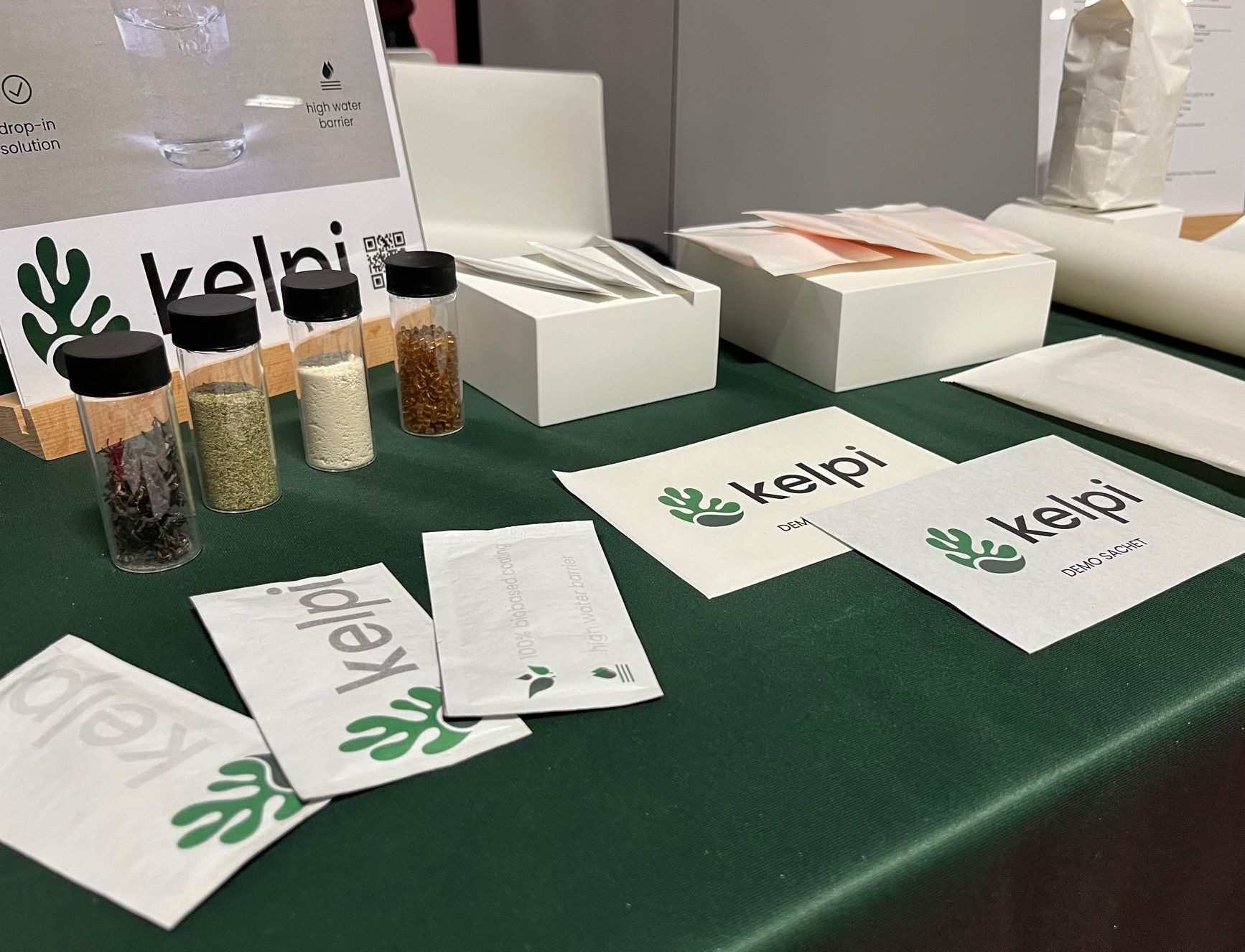
Founded in 2020, Kelpi replaces fossil-based coatings on paper, card, and fibre with a patented material, made out of seaweeds combined with vegetable oils, which “gives a really good water barrier,” CEO Hugo Adams explains.
– The material will either hold water really well, to be used o for things like face creams, liquids, and drinks, to prevent the water from getting out. You can also contain things like powders to stop the water from getting in. It’s a recyclable, biodegradable packaging, mainly sachets at the moment, for the first product to market and to replace plastic. After all, that’s the purpose; we’re in it to replace plastic packaging.
Because those coatings are not so sustainable.
– No. And, either the packaging is plastic, and you can replace the plastic with paper and card coated with our material, or the coating is plastic, and then, we’re just replacing the coating.
And you are market-ready with the sachets.
– Yes, they will be the first product to market, in spring, so we’re about ready to launch.
On an industrial scale?
– Yes, we’re doing industrial-scale production of the material. When we create our material, after we’ve bonded the seaweed and vegetable oil molecules together, it’s a white powder. Then you apply that powder as a coating to the paper card and fibre. So you can either disperse it in a solvent and apply it as a liquid, or you can turn it into pellets and extrude it as a pellet. That extrudes plastic. Both of those processes are on an industrial scale and can go through existing machinery. with current packaging providers.
So you don’t have to build your own machinery to use your technology?
– No, we don’t have to build any, and we’re producing with a contract manufacturer. We source the ingredients that we need together with the manufacturer to produce the powder. That then goes through industrial machinery with the large packaging companies to apply it to the paper carbon fibre, to then convert it into the packaging.
And your target group is packaging producers.
– Yes, they are the clients. We also work with some brands on R&D contracts, like L’Oréal (chosen as one of 13 startups and SMEs from nearly 1,000 applications to join L’Accelerator, L’Oréal’s flagship sustainable innovation program, Ed’s note), Unilever, and Diageo, to develop solutions for them. But the person who buys our material is the packaging companies to then coat it onto their paper, card, and fibre.
It has to be highly demanded by brands.
– Yes. It’s a huge market. It’s a lot of plastic. And the brands and packaging companies either want to replace plastic because consumers are demanding it, or legislation is coming to push it. But these bio-based solutions are a great solution where the technology can meet the same performance as plastic, and that’s what makes us different; we can actually perform the same as plastic but with a totally renewable feedstock and a recyclable, biodegradable end of life.
While the demand for seaweed might not be as big.
– Well, seaweed is useful in lots of applications, but there’s plenty available for what we need.
It’s a great foodstock, carbon-negative, needs no freshwater, land, or fertiliser.
Can you say that your innovation is carbon negative as well? Have you conducted LCAs?
– It won’t be carbon negative in total because of some of the other materials that we’re using to create it, but it’s a good carbon footprint.
And what are the next steps here?
– To launch in the market in the spring. We’re ready to launch and then replace plastic sachets with paper card sachets. And, there’s more coming down the line. We can do trays and work with moulded fibre, dry moulded fibre, wet moulded fibre, and coat them. The material is very flexible, so we can thermoform, injection blow-moulds, all sorts of things, says Adams. He adds:
– At the moment, the priority is to get a product in the market. We have four clients for March, April, and May.

100 innovations that can transform beauty, #1: Watch this space: a next-gen refill solution is here
100 innovations that can transform beauty, #2: Enzymes reshape plastic recycling as we know it, here’s how