
100 innovations that can transform beauty: “The objective is to bring it back to its original building blocks and keep the material in a closed loop,” says Benoît Grenot, CEO of CARBIOS.
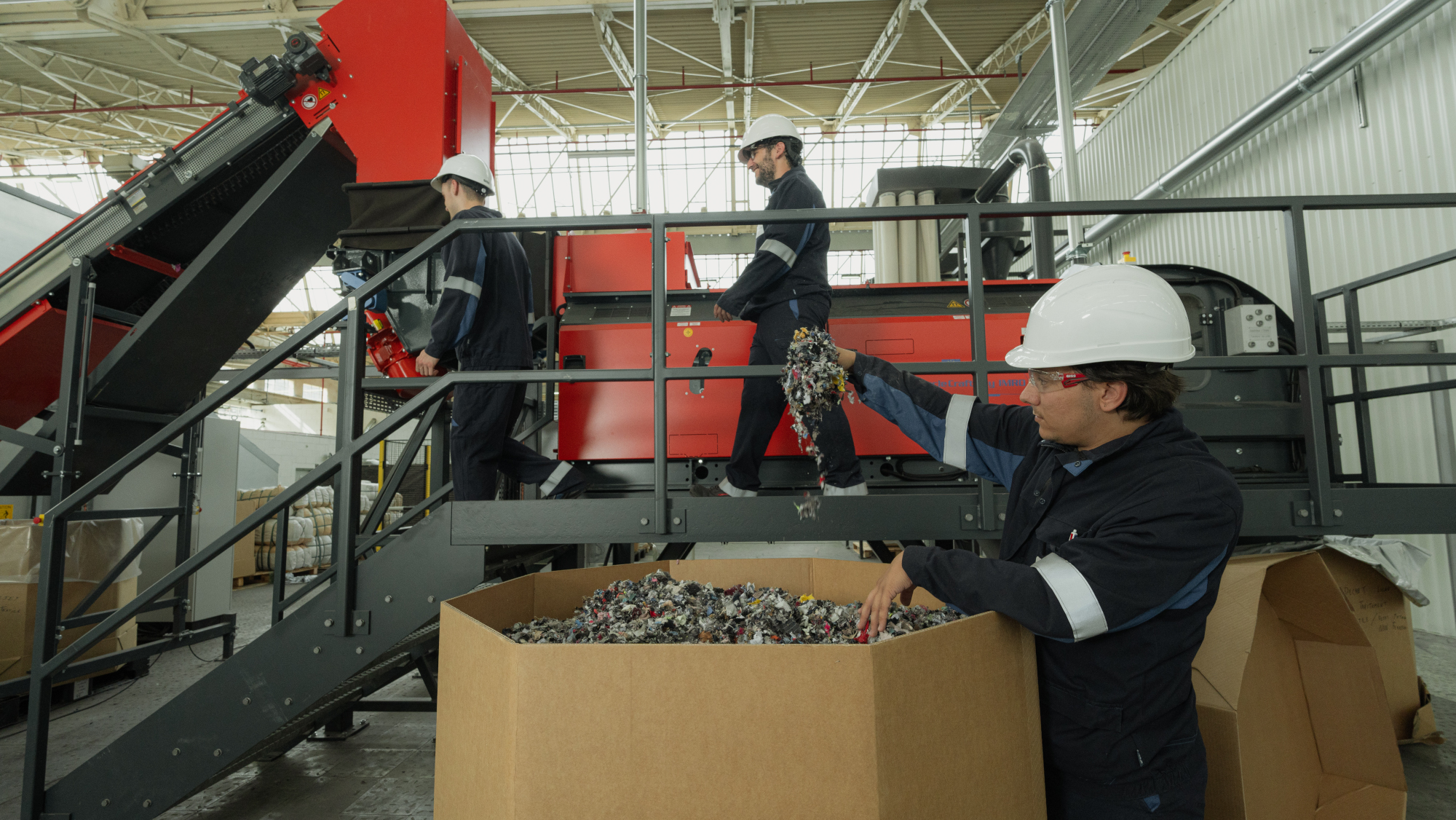
At its core, CARBIOS’ technology uses enzymes to break PET plastic down into its original building blocks, or monomers. These monomers are then purified and can be used to make new PET with the same quality as virgin PET. The startup can also depolymerise polyester from end-of-life textiles back into its original monomers.
– What makes the technology particularly interesting is the type of waste it can process, Benoît Grenot, CEO, explains. The enzyme can break down PET from complex waste streams, including coloured or multilayer packaging and polyester textiles, which are difficult to recycle mechanically. The resulting material can then be used again in demanding applications, including food-contact packaging and textiles.
– So, rather than simply turning plastic into a lower-grade material, the objective is to bring it back to its original building blocks and keep the material in a closed loop.
What’s the state of enzymatic recycling along with chemical or mechanical?
– I think it is becoming less about choosing one technology over another and more about understanding which technology is appropriate for which waste stream.
– Mechanical recycling remains an important part of the circular economy, particularly for relatively clean and homogeneous waste streams. But there are limits to how many times some materials can be mechanically recycled while maintaining the same quality.
– Enzymatic recycling offers another route, particularly for complex PET waste that is difficult to recycle mechanically. Because we break PET down into its original monomers, we can then recreate PET with virgin-like properties.
– The important point is that enzymatic recycling should not be seen as replacing mechanical recycling. It is complementary to it. The objective is to increase the proportion of PET waste that can actually be recycled and to maintain the quality of the material in the loop.
What’s the future like, if you were to predict? A mix of all three technologies?
– There is no single recycling technology that can address every type of waste, and the most efficient approach will depend on the material, its quality, and the application we want to recover it for.
– For PET, mechanical recycling will remain important where the waste stream is suitable for it. Enzymatic recycling can address more complex waste and bring it back to virgin-like quality. Other chemical recycling technologies may also have a role for different materials or waste streams.
– We should be building a recycling system in which different technologies work together to maximise material recovery and reduce our dependence on virgin fossil resources.

You’re backed by several of the world’s leading ventures and have launched collections with L’OCCITANE and L’Oréal Groupe. In what other ways do you work with beauty brands as of today?
– Our collaboration with L’OCCITANE is part of a broader approach to working with beauty brands from development to industrial deployment.
– We have been working with several major beauty players on packaging. With L’OCCITANE, for example, we first developed a bottle prototype using enzymatically recycled PET from complex waste streams, before moving to a commercial product. In 2025, L’OCCITANE launched its Cedrat Shower Gel bottle made from 100% enzymatically recycled PET.
– We also developed the first cosmetic bottle made entirely from enzymatically recycled PET with BIOTHERM, which led to the commercial launch of the Waterlover Sun Mist bottle in 2025.
– And in 2025, we signed multi-year commercial contracts with both L’Oréal and L’OCCITANE for biorecycled PET from our future commercial plant.
– For brands, the objective is not simply to provide recycled material. It is to help them integrate high-quality recycled PET into their existing packaging systems while addressing their circularity objectives, quality requirements, and the growing regulatory expectations around recycled content.
Fossil-based options are almost always the cheaper ones. What’s your view on competing with price, now and in the future?
– Today, virgin fossil-based PET benefits from a very mature and highly optimised global industrial system, so achieving price parity is not simply a question of scaling up the technology. The economics also depend on the cost and availability of waste, collection, and sorting infrastructure, energy, and the overall scale of the recycling industry.
– But the equation is changing. Regulation is increasingly creating incentives for the incorporation of recycled materials, both in packaging and textiles, through mechanisms such as recycled-content targets and financial modulation or premiums linked to the incorporation of recycled material.
– This is important because the value proposition of recycled material is not only its production cost compared with virgin material. Brands also must consider regulatory requirements, access to recycled content, supply security, and their own circularity commitments.
– As enzymatic recycling moves towards industrial scale, we expect the economics to improve. But the broader point is that competitiveness will also increasingly be shaped by the regulatory framework and by the value that society places on keeping materials in circulation rather than continuing to rely on virgin fossil resources.

Benoît Grenot’s extra insights
– One of the biggest shifts happening across creative industries is that sustainability is moving from being mainly a communication topic to becoming a product, design, and business topic.
– For a long time, brands could think about sustainability as something that happened alongside the product: a communication platform, a responsible collection, a more sustainable material. Increasingly, it must be integrated much earlier, into the way products are designed, sourced, produced, used, and eventually managed at the end of their life.
– And this is not only an environmental issue. It is also becoming a question of competitiveness, regulation, and access to resources.
– The lesson goes beyond textiles. It shows that solving sustainability challenges requires the whole value chain to evolve together: creating demand for recycled materials, improving collection and sorting, scaling technologies, investing in innovation, and ultimately designing products with their next life in mind.
– For creative industries, I think this is an opportunity. Design is not just about making something desirable today; it can also influence how long a product is used, what happens to it afterwards, and whether its materials can remain valuable in the future.
– To conclude, I would see another critical issue: sovereignty in an increasingly polarised world. For our sector—recycling—this challenge can serve as a starting point, a driver to stimulate the reindustrialisation of value chains that have left Europe over the past twenty years. The textile industry is a perfect example in this regard.
100 innovations that can transform beauty, #1: Watch this space: a next-gen refill solution is here
100 innovations that can transform beauty, #2: Enzymes reshape plastic recycling as we know it, here’s how
100 innovations that can transform beauty, #3: Seaweed beauty packaging innovation is only weeks away from launching, on an industrial scale
100 innovations that can transform beauty, #4: How this new lightweight liquid package can transform refill solutions for beauty and personal care brands
100 innovations that can transform beauty, #5: How to create fibre-based closures at cost parity with plastic alternatives