
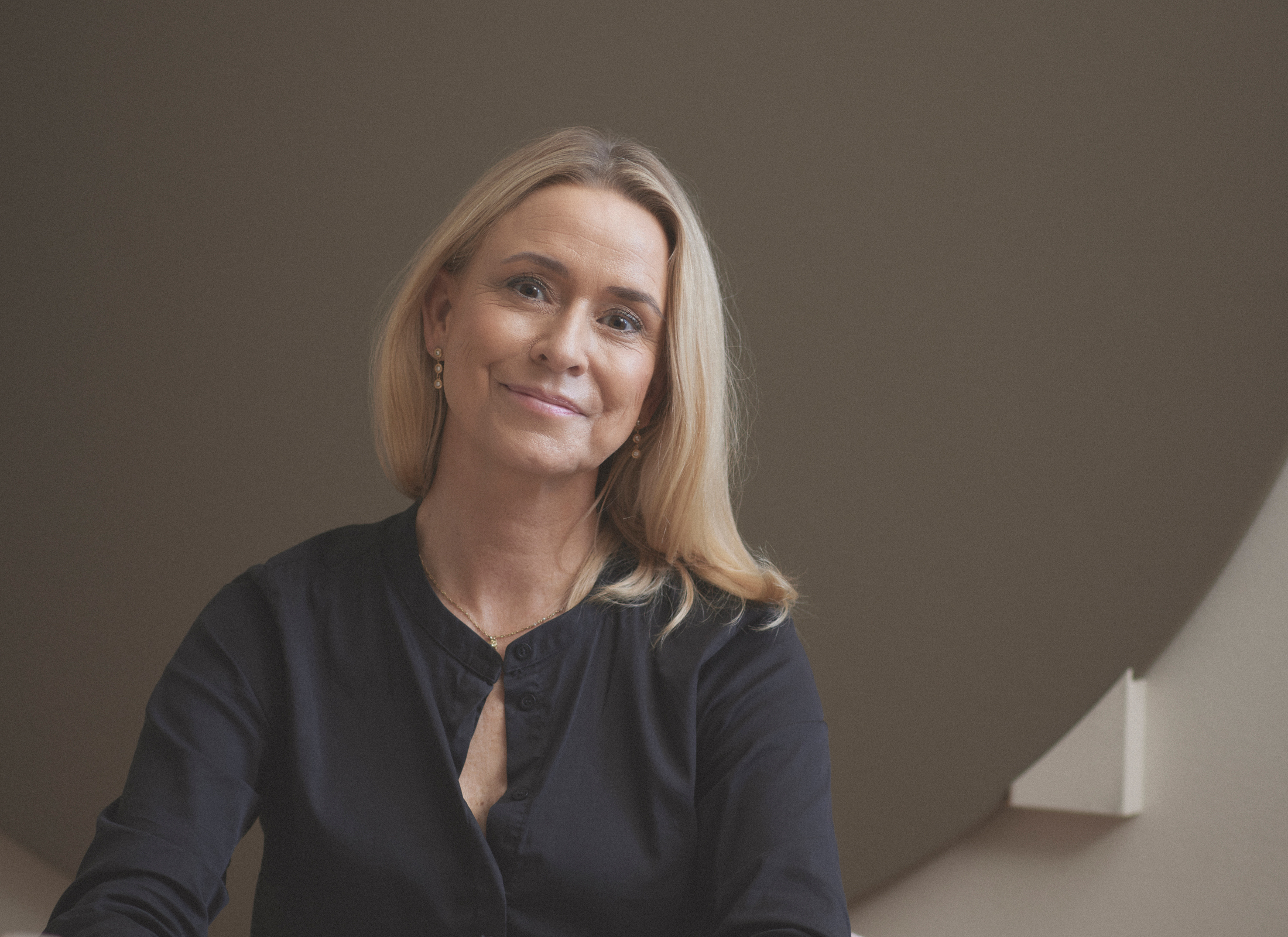
With her brand, Odense-based medical doctor and entrepreneur Nanna Kirkebjerg connects the physical and emotional worlds and thoughts, including old medical herbs that we’ve known for ages, from holistic medicine in China and integrative medicine.
Founder Nanna Kirkebjerg describes her brand, Lucia Care, as a combination of the botanical world and its medical herbs and science that has proven to work.
– As a doctor, I like to have one leg in both worlds, she says.
And you may see that the science-backed part is very important for you as well as for today’s end consumers.
– Yes. Many people have an idea that you can’t combine the two; that if it’s natural, it doesn’t work. We do know that nature has so many natural peptides in plants, as well as ingredients that support collagen synthesis, minerals that help build collagen, and vitamins and antioxidants. That’s a really good combination, together with things from the dermatological world that work.
And you’ve obviously used your own professional experience when creating the products.
– Yes, including old medical herbs that we’ve known for ages from holistic medicine from China and from integrative medicine. Myrrh, for instance, is mentioned five times in the Bible to have antiviral and anti-inflammatory effects on wounds. So, I use old empiric science as well as new science with the herbs and things that have a big effect on the skin, such as vitamin A and hyaluronic acid.
When you say new science, can you share any special one that you find extra interesting?
– The current discussion about peptides and how you make more collagen in your skin. That is really interesting for me, who’s working with natural medicine, because many of these things are in nature, building new cells all the time. The plants have to grow, so they build new cells. If you make something in chemistry or using tech, it doesn’t grow by itself. But you’re getting the vital effects from the plants, and there are all the peptides, antioxidants, and collagen synthesis you need to make collagen in nature, Kirkebjerg shares. She continues:
– For peptides, natural choices are safer. If you go with chemical choices, it can create harm to the cells, and they can grow in a way we don’t want to, including cancer cells. If we take them from nature, we know how they grow and how they make vitality.
What do you see coming for peptides? What’s on the horizon?
– More restrictions and rules from the EU. They’ve started to be very careful, for example, not allowing metals in skincare, and talking about taking out stuff like zinc, copper, and silver. The rules are so controlled. In China, they describe how you can just go to the supermarket, buy them, and inject them. That’s really not the way we want it.
– From now on, we will see more rules here controlling things, and it’s very important with the certifications. We already have the eco-certification for sustainability, what you put in the product, and proper terms for the workers making the products. I see more and more certifications needed to be sure that we don’t harm ourselves with, for instance, PFAS.
What other new research connected to sleep and wellbeing are you looking at?
– I am particularly interested in Patrik Gran’s research into nature therapy, which he has been studying for several decades. I am also very interested in research into epigenetics and the impact of neurotransmitters and neurohormones on our well-being. Another area I follow closely is the gut microbiome and its influence on inflammatory conditions in the body, as well as the links between gut health and mental well-being.
If you talk about natural beauty ingredients, there is a growing concern that they create bigger emissions than lab-grown options.
– Yes, you can say that, but if you think of the whole picture, more people are working with it, and they are making more aloe vera and more rosemary on the farms. You don’t take it if you plant it as well at the same time.
To regenerate.
– Yes, and it creates more jobs and engages more people, because the worst-case scenario is that no one wants to grow something because you don’t need it, since you can do everything using technology. Then, all of a sudden, we don’t have the green areas which we need to eat, as well as for mental health.
– We spend up to 93% of our time indoors. They’re talking about the big indoor epidemic now in the US. With more time in nature, your hormones, like dopamine and melatonin, are going up. So, you sleep better if you’re outside more; you’re getting happier, more emotionally regulated, and have lower blood pressure and pulse. It’s really de-stressing and important to us.

And you define the brand as integrative.
– Yes. You can say that it’s another word for holistic, which, to some, can sound a little more alternative. Integrative medicine is when doctors take the best parts from different things that are working, backed by research. It could be music therapy, nature therapy, or other de-stressing things that are combined with traditional medicine. It integrates the physical and emotional world and thoughts, because if you don’t feel well, are distressed, or sad, you can see it in your skin as well. If you’re working with the whole integrative way of thinking, you’re getting healthier skin as well.
Does it resonate with the end consumer as well? Do they like the term?
– Yes. I think more and more we understand the connection that you can’t just be healthy in the body and then eat terribly badly and then go for a run, and go home and have a big fight with your partner. During such a fight, the inflammatory markers like cytokines go up for five hours in your blood. Then it doesn’t matter if you’ve been very healthy just before.
Lastly, you have Swedish roots but have been based in Denmark for many years. What are the differences between the two countries in consumer behaviour?
– I feel that Denmark is slightly ahead when it comes to organic skincare, particularly in terms of certified vegan and Nordic Swan Ecolabel products, says Kirkebjerg. She adds:
– Transparency is incredibly important in both markets. We work every day towards making our business as sustainable as possible, but of course, every product manufactured leaves an environmental footprint. The most sustainable thing consumers can do, I’d say, is to choose multifunctional products.
Words: Johan Magnusson