
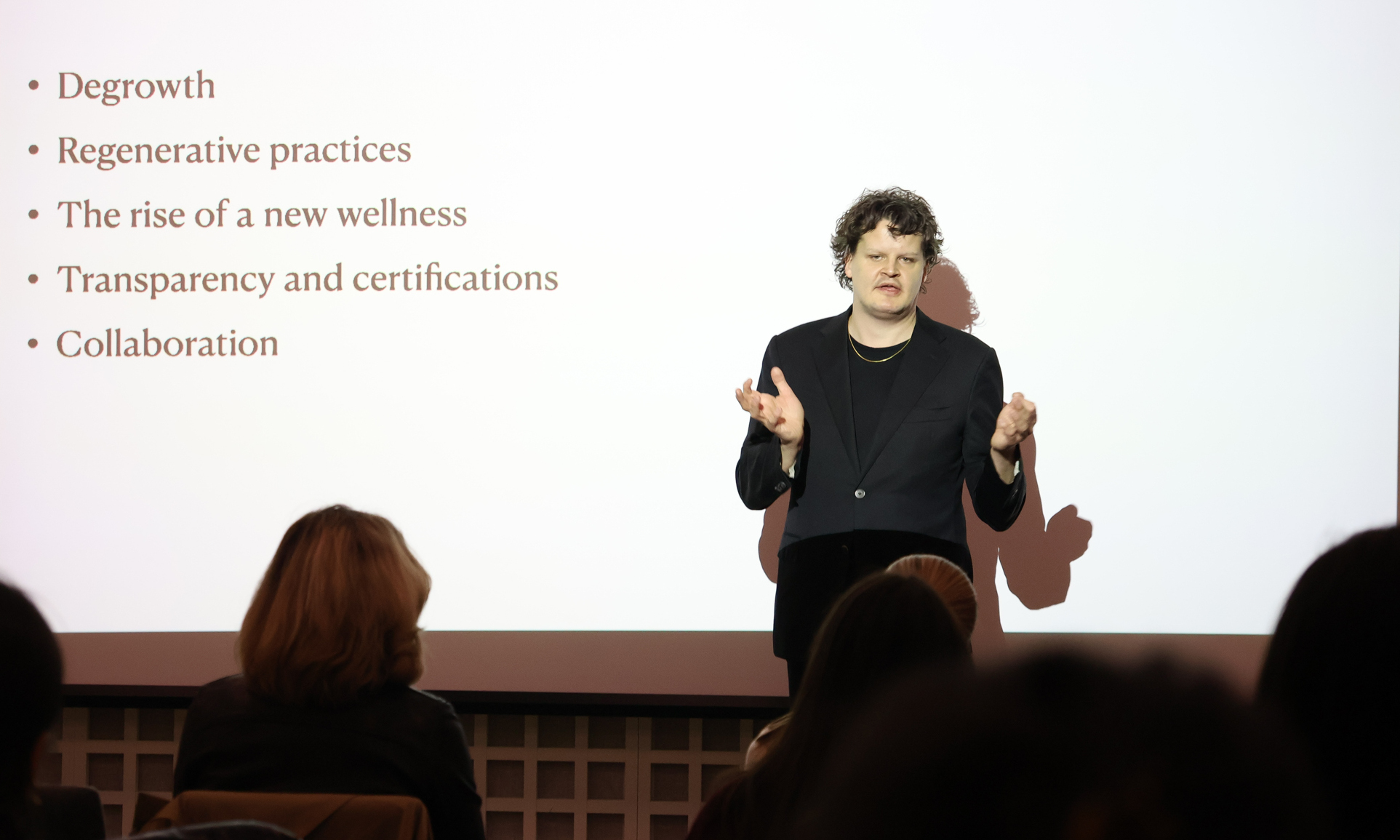
Perhaps slightly unrealistic—or just thought-provoking—I listed five ideas that have already emerged and can potentially reshape the beauty and creative sectors.
I was honoured to be welcomed back for the second year in a row, giving a lecture on the current state of Swedish beauty. The audience was a group of American top level beauty executives from the Fashion Institute of Technology’s (FIT) Master’s Program in New York that is currently visiting Stockholm.
In my list of key takeaways, I, for instance, included that sustainability is considered a hygiene factor here, while “clean beauty” is not. Instead of the fearmongering and potential greenwashing connected to that unclear definition, I shared the NOC data predicting that organic beauty brands on the Swedish market will see a 10% CAGR until 2030.
Before that, I presented my food for thought list:
- Degrowth. Should growth always be top of mind? Perhaps not for the audience growing up to become the next generation of end consumers. The signs are there that they expect brands to act responsibly and prefer brands that can present a more human, conscious, and value-driven growth. Are business leaders brave enough to respond to them?
- Regenerative practices. A recurring favourite topic of mine. The aforementioned end consumers of tomorrow expect brands to not only be conscious but also to give back. Preferrably, to leave the soil in better shape when harvesting than when the seeds were put in the ground. An exciting one to follow!
- The rise of a new wellness. Mintel calls it metabolic and “a deeper inside-out approach to wellness.” Southeast Asian beauty brands call it a reality. In the wake of the recent wave of wellness in the beauty category, the next natural step is to look at ancient old Far East techniques for inspiration on how to, for instance, look up what’s causing the headache instead of just taking a pill when it occurs.
- Transparency and certifications. Sales and consumer data reveal a need for validation behind the sustainability marketing claims. In our region, the Nordic Swan certification is a long-time mark for, very, conscious products, and it seems like a similar development will make a real mark on other markets as well. In my work with the report on the Swedish beauty industry for the Swedish Institute, one interviewed executive shared that the content that works the best on social media, by far, is the clips from the brand’s own factory. Consumers want transparency—the consumer of tomorrow expects it.
- Collaboration. Another takeaway from my in-depth interviews with Swedish beauty professionals is the lack of togetherness. When new policies and regulations will affect the sector, similar to how DPPs are a huge topic in fashion and textiles, there will be a clear need to work cross-industry, team up with competitors and industry peers, to become stronger together. Collaboration is key!
Photography: Jacob Lindell