
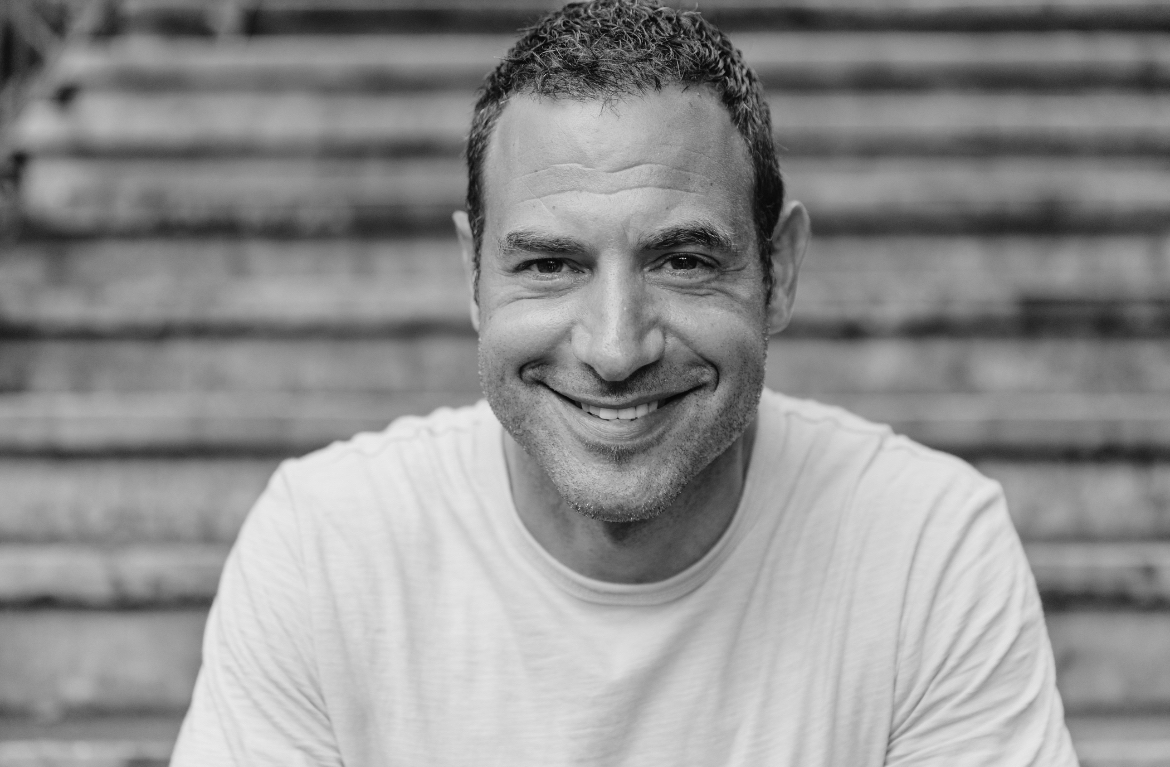
“We are still in the infancy of longevity medicine”, the leading expert states.
Sonners is a leading expert in hyperbaric oxygen therapy (HBOT), blending an expertise in biology, regenerative medicine, and chiropractic care. He has over 17 years of experience practising HBOT, has authored two influential books, Oxygen Under Pressure and The Art and Science of Hyperbaric Medicine, and is currently completing his Ph.D. in molecular biology. Last week, he visited Age Back Co. Stockholm to share insights about the science behind, and results that can be achieved, with the use of Hyperbaric Therapy (HBOT) Chambers.
– I talked about taking a multi-therapeutic approach to a multi-dimensional issue. We also discussed how many strategies we use, and we choose to use simultaneously, as stacking the correct therapies together often leads to a synergy much greater than any single device or strategy may have on its own. Lastly, we discussed that chronic illness and aging share three main hallmarks: Chronic inflammation, Mitochondrial dysfunction (low cellular energy), and Stem cell exhaustion. Therefore, the strategic approach would be to address these hallmarks in a number of different ways using a variety of therapies.
Being such a hot topic, what’s your view of the current state of longevity?
– It’s an exciting time, more and more people that the likelihood they will live to older ages is very high. While maximising the number of years is important, developing strategies that allow us to enjoy those years and to fully participate in life in whatever ways we want to is really the most important. So, more and more people are looking for strategies to improve their quality of life for as long as they can so that they may fully enjoy whatever amount of years they get.
And what do you think make HBOT stand out here?
– Hyperbaric is incredibly unique inside of this discussion. Primarily, this is true because oxygen is critically important for all cell function, all cellular performance, our ability to heal, repair, and regenerate. It’s not that Hyperbaric is the cure for anything quite honestly, it’s much more that the level of oxygen in our improving our ability to deliver this oxygen to working cells and tissues has a very large range of impact, from controlling inflammation and improving immune function, to maximising cognitive performance all the way through increased tissue repair regeneration, and overall cellular performance. It’s very rare to have a single modality that is able to have such a wide variety of impact. And this is why Hyperbaric really stands out from the majority of other healthcare and longevity tools.
What do you forecast will happen in the field in the next few years?
– I think we are still in the infancy of longevity medicine. There’s quite a bit of work to do both on the research as well as on the clinical side, Sonners shares. He continues:
– The studies that are coming out now on epigenetics and the role that our lifestyle and environment play on our overall health show us how important it is to create an environment and develop lifestyle strategies that are congruent with the health goals that we have, so that we may maximise our health span inside of whatever lifespan we get. In the next few years, I believe we will learn a great deal more about which strategies are the most effective and which need to be combined for maximum impact. I also believe in the next few we will see a much bigger into personalised medicine.
– I think it’s just important to note that for the last 20 years, the healthcare industry has been focused, non-genetics, and that our genetics are what have been dictating our disease states. While genetics may contribute, and certainly to a concept of predisposition to certain health issues, it is certainly far from being written in stone. The impact that our environment and lifestyle have on our health is upwards of 75%. As a result, understanding which environmental factors in lifestyle choices are improving or deteriorating our health is really an important step in maximising quality of life and health span.
In a special panel talk at Age Back Co. Stockholm, Sonners joined Dr Nathalie Helm (Age Back Co) and Anders Kjellberg (PhD researcher, ICU consultant, and head of the Hyperbaric unit at Karolinska University Hospital, Stockholm) to share more about the new tech reshaping the longevity field.
– In the research I did a couple of years ago, we looked at inflammatory markers. We knew that that was gonna improve, but we didn’t know which ones or over what period of time. Everybody in the study was non-diagnosed and asymptomatic because I believe that most of us are chronically inflamed and I believe that most of us are on an accelerated aging program on planet Earth. So, I wanted to see if I could take non-diagnosed healthy Americans and still move those needles.
– We saw inflammation come down across the board, we saw cognitive performance improve almost in every factor, but the thing I was really interested in was the epigenetic changes. We know that the epigenome is essentially registering our environment, our choices, our lifestyles, and it’s signalling cellular behaviour based on environmental factors. This test was around 900,000 markers and we probably know a few 100 of them and what they even mean. Part of my excitement in the future is understanding the epigenome at a much deeper level. That is so that when we see these changes, the epigenic switches turning on and off, we understand what that actually means in terms of either moving someone from a healthier direction or away from a specific disease or reducing their risk of X, Y, or Z. I think that in less than 5 years, rather the next year or two, we’ll find out so much more about it.
Age Back Co’s Dr Nathalie Helm noted that with AI and how fast things are moving now, there’s a new type of adaptive platform trials where you can test multiple things at the same time.
– You can test lifestyle factors, nutrition, and take all these safe regenerative therapies, rule out by doing an interim analysis, and keep the winners and continue, she said. I’m curious to do better, big trials where we can test all these different things that we think, but don’t really know, are working and look at both biomarkers but also end points like cancer, dementia, heart disease, and death.
– What I have been hoping for the past 10 years of my research is to find a biomarker to individualise the dose, which we don’t really have today, said Anders Kjellberg. We can look at what happened after 30 sessions, but I would ideally have a biomarker that I can check on any of you before and after one treatment and say, ’Am I giving you the right dose right now?’ That biomarker we don’t have today.
Speaking of longevity, Sonners explained his belief that most people don’t even care necessarily how long they live, but they want as good of a life as they can in the years that they have.
– The age gap of health span being around 65 and life span being 78 to 82, there’s 15 to 20 years of rapidly declining health and quality of life. Nobody wants that. What we can promise is that the better you take care of yourself, the higher the quality of life you will have in the years that you have. If you get lucky, we can push quality of life and longevity, but I think longevity is harder to promise because a lot of other things could play a role there. Quality of life, I think, is much easier to influence from a day-to-day decision-making.