
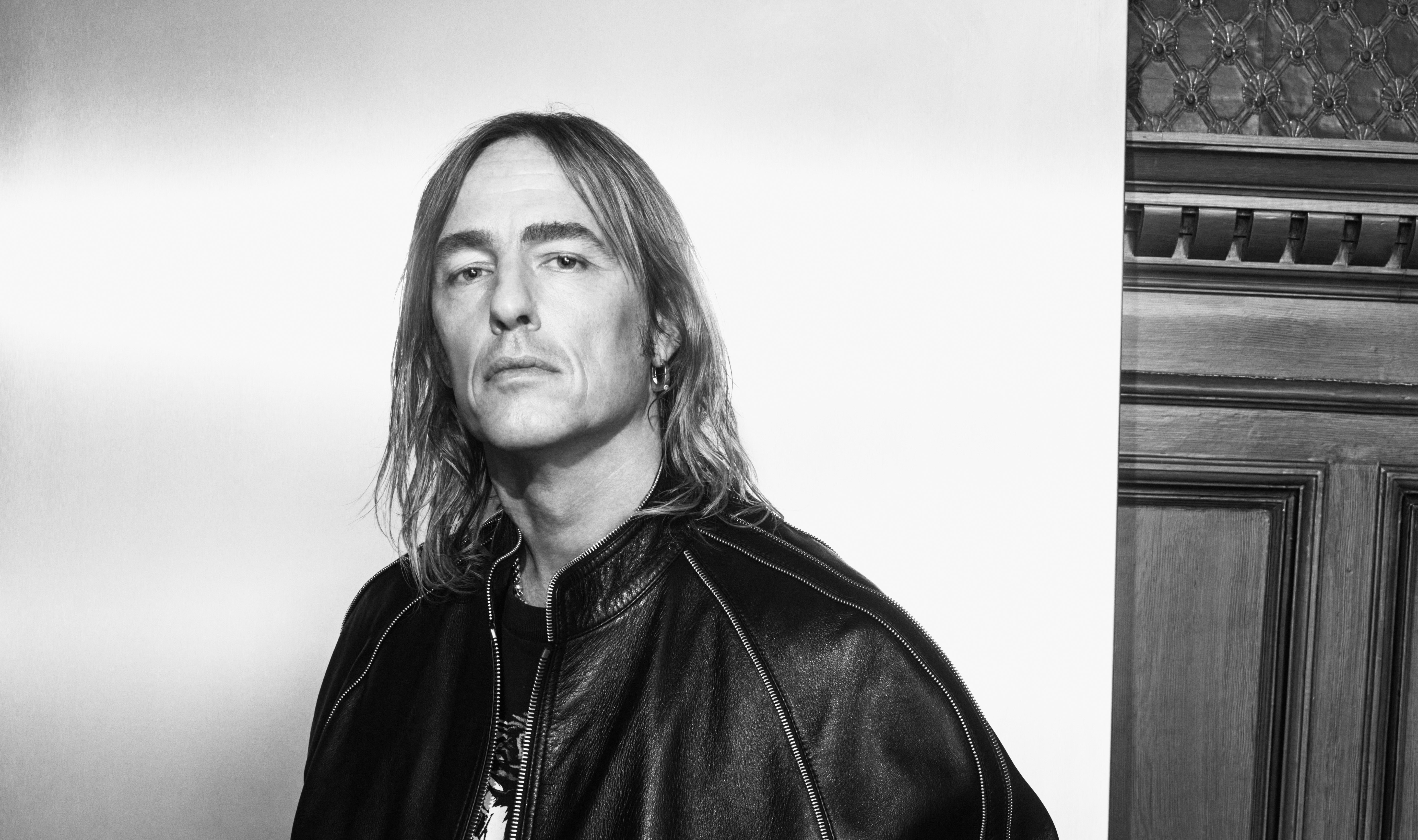
When bringing his Obayaty to a global audience, inspiration beats education, and behaviour is more important than price point: “One of the most common reactions is that, ’but this is not makeup, I just look good.”
We meet the creator, art director and co-founder in the first physical Obayaty store, located at leading Scandinavian department store NK in Stockholm.
– It’s a fascinating space because we’re at the main entrance, where you wanna hang out. It’s got the ambience of a big hotel somewhere in the world, which is quite amazing. And we have quite a large spot for a small, young brand, but I guess that reflects our ambition and aspiration, as well as a great chance for us to actually show our products to a wider ordinance, he says.
You describe it as ‘the only male beauty store in the world.’
– Yes. As most of us are aware, male beauty is lagging behind so I’m not sure if that’s a reflection on how progressive we are or how slow the male beauty industry has been or is at the moment… We’ve been live for a year and a half, and one of the biggest insights from that year is that, wow, we are really pioneering a market. We’ve had an amazing reception, mainly so far in Europe and in the US.
– I’m very humble, but a lot of the bigger retailers are saying ’wow, we love it,’ the next question or insight is, ’where should we put you?’ They don’t have this offer or spot in their department or department store. So, it’s quite an interesting dialogue with a lot of retailers around the world, which ends up being around consumer behaviour, saying, ’Where do men feel comfortable shopping beauty products?’ Is that in the beauty section, which, in the bigger department stores, would normally be at the entrance, and that’s predominantly with a female focus. Or should they place us on the men’s floor, normally 2 or 3 floors up in the building?

How have they solved it?
– We are exploring a mix of what I just mentioned. It’s quite interesting that we are, of course, in the beauty section in some stores and with specialist stores—the ones that only focus on beauty, like Skins in Benelux—and of course, the big department stores. But we are also in stores like Woo Store in Berlin, which don’t carry beauty per se, except for a couple of fragrances. But they have a consumer that puts a bit more focus and energy on their appearance and personal style, and it’s quite an obvious link between that and the ambition to actually look and feel good.
We saw a recent survey in Denmark saying one-third of male Gen-Z use makeup, such as mascara, nail polish, or concealer, to express their personality. Yet, there has been little talk about it. What’s your view of where we are?
– I think you have a point. The younger generation doesn’t experience the same stigma as the older audience. However, we do see that we have a more mature audience of customers, 35 to 40, than we first imagined. I believe that a lot of these have a lifestyle or a career where they are exposed a lot to other people and want to look good. They want to feel like the best version of themselves.
According to Frankenstein, buying male beauty is very much linked to a certain kind of behaviour rather than price point.
– Call it an elevated, modern lifestyle, where you do spend some extra energy, time, and money on your appearance. Dating could also be a pretty big driving force!
It’s one thing to come in to Voo Store, NK, or a big department store and another thing to go off the shelf. In your case, opening up a slightly new consumer group, it’s easy to think that it requires a lot of education of the staff in store.
– Totally. One of the insights so far is that education is such a boring word. Instead, it should be about inspiration. For the last few months, we’ve focused quite a lot on putting ourselves in a wholesale or retail environment—which we didn’t initially—where people can actually try the products.
– One of our most common comments from customers, where a lot of guys are stigmatised by the word makeup, is that no, makeup is not for me. However, one of the most common reactions is also that, ’but this is not makeup, I just look good,’ which is an interesting twist.
– It’s also different in different markets and cultures. We’re born in LA and we’re developed in Stockholm. Stockholm is maybe not the biggest market for male beauty. If you travel to Copenhagen, more or less every waiter uses nail colour. Even if they have, say, a vest and a white shirt, they wanna express their personality.
– Not being the most progressive ones over here has also influenced us in the way we develop the products to be really accessible. The only way to get rid of the stigma is to make it a natural thing, so we have developed products that are easy to use and almost impossible to fail with. It should be very accessible and intuitive. That’s why we did not copy the traditional beauty industry, which focuses on women and has done so for a long time. Most women, in terms of education, are far ahead, and we have a target group where a lot of them have never tried such a product before. To go from no experience, not having it as a part of your culture when you grow up, do makeup on a doll or a friend or on yourself, but to go from 0 to 100 and start using pencils and advanced products is quite a leap. It requires a lot of education or inspiration.
– This business, as you know, is a lot based on the fact that you have a few production centres in the world that can provide you with different products. They spend years of developing. And it’s great products, so a lot of brands take the advantage of finding a producer that already spent all this time developing a product and say, ’OK, what do you have in this category?’ And the producer would name them, the brand would pick one, and ask to put a label on it. To us, that was not an option. We wanted to go all the way back to behaviour, with men’s prerequisites being a bit different, and start from zero, developing products that are easy to use and targeting male concerns.

Both Chanel and L’Oreal have invested heavily in male beauty, but their ROI has been small. What’s your view on becoming profitable? How urgent is it?
– We have strategic investors that believe in our products and in our vision. That being said, we, and our investors, believe that we are on the right track. What none of us know is whether it’s gonna take a year or 3 years. We do everything we can to increase that time plan, of course, but you have to recognise that it’s not a question of if but when this market will open up. It really follows every tendency that we have seen within the way men consume, the way you want to express your personality for the last maybe decade or so.
It’s a sign of the times.
– Totally. And everything is about timing. History will show if we were in the right place at the right time. I think some of the competitors that you mentioned had great products, but their timing was maybe a bit too early. That being said, what we experience now is that we’re pretty much driving this category, and that is both good and bad.
Having competitors can also increase awareness.
– Totally. So, in that sense, we would welcome some competition.
You’ve touched upon it, but what are the other lessons learned from the years of developing Obayaty until today?
– Strip away the fuss and focus on function, care and sustainability, and the result becomes universally appealing.The irony is that we created these products to invite men into a world they’d long been excluded from, and precisely for that reason, many women not only buy them for a man close to them, but also use them too, Frankenstein shares. He continues:
– If I’m in a bad mood, I would say that this is a bit like having kids; If you really knew what you were getting into, would you have dared to? But that’s with every new venture.
– We have a lot of insights from the first years. A few years ago, I did a very big architectural concept, a 900 square meter restaurant, which was the first project I did on that scale. On the opening evening, a very established architect whom I respect a lot visited. He took me aside, telling me that I had done a great job, before asking, ’How much of the budget do you save?’ I asked him what he meant. He replied that he figured I would (ask what I meant), ’but next time, save 20%—you never know when people enter the door, if they’re gonna go right or left.’
– I think that we experienced that you can use that on every venture. Why we do a store is not to create reach—Stockholm is not the biggest market. But the learnings we have every day when we meet our customers and see how they interact with our products, understand their needs… We have such a clear vision, and we’re gonna follow that vision, but I think we’re humble enough to also listen to our customers, because we are pioneering a market, and we need to understand what will make people join us in that.

Lastly, what do you forecast in male beauty?
– Everything we learned so far and everything we get from new markets that we encounter, the interest in male beauty is growing quite heavily and rapidly. It’s so interesting to also tap into different countries; I don’t think it matters if you’re based in the US or in Europe or whatever, you always have to look at other markets to understand the trends. What we see in India at the moment is that it’s exponentially the market where male beauty increases most rapidly. Then, you come to realise that, wait a second, there is another culture out there. In Scandinavia, we made quite a big deal about being modest, humble, and not standing up. We have something opposite in other markets where you appreciate that your personality, feature, or creativity will stand out. The only thing that we do know is that the market is increasing on a global scale, and quite a lot.
Do you know why male beauty is so big, and growing, in India?
– Male beauty in India is expanding because masculinity itself is being redefined. As incomes rise and global influences accelerate, men feel freer to invest in themselves, not out of vanity, but as a form of self-expression and confidence. Beauty in India seems to be less about surface, more about presence.
And perhaps we’ll see it grow further in some places where you wouldn’t expect it at first.
– Washington, here we come! Frankenstein concludes, laughing.