
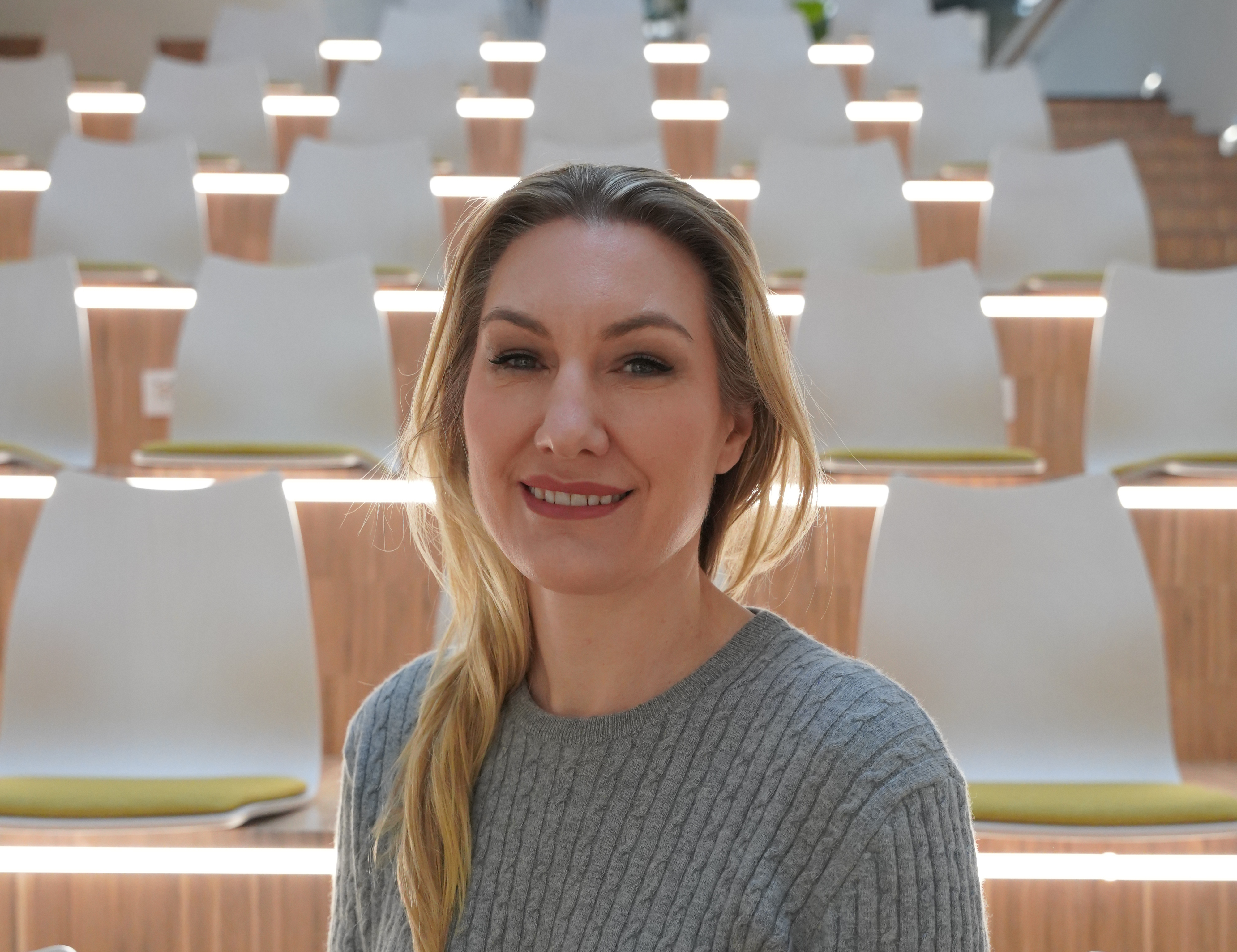
Jenny Rydhström provides a generous look inside one of Scandinavia’s leading beauty retailers. Hear the Gents founder explain how to reach a loyal end consumer without almost any help from TikTok, Google, and Meta, and the tremendous challenge coming when building their own factory in the south of Sweden when the suppliers raised their prices one too many times.
Rydhström is the founder and CEO of Gents. Founded as an e-com in 2005, the retailer’s target group is men, comprising 70% of the customers, with an average age of 40. Sweden is the main market; 20% of the turnover is from Norway, while Denmark, Finland, Germany, and France all have local sites, and gents.com serves the whole world: ‘We ship to at least 20 countries every day.’ Altogether, she states, the company is not targeted towards the regular TikTok person.
– We don’t work much with TikTok, and social media doesn’t even bring 5% of the traffic to our site. It’s other channels. On the other hand, we have really loyal customers. I think many are looking for solutions to their problems, like hair loss or skincare. They’re just regular guys. Not fancy. We started with a shaving focus, which is still our main sales category, together with perfume. After the beard trend, niche perfumery peaked. I think it peaked last year or this year. Health, including longevity, has, of course, been big for a few years now; I think we still have a few years left on that trend before it peaks.
And similar to shaving habits and niche perfume, longevity might become more of a natural part of a mainstream lifestyle.
– Maybe. Yes, I think so. I agree.
Okay. Can you take us through your private labels?
– Yes. For any company in clothing or beauty or whatever, the gross margin of a product really is the huge differentiator between success and failure. And it takes a few years as a businesswoman or businessman before you realise that the gross margin controls the P&L of a company and is the big thing, not the sales.
– We realised that for some products that the customer didn’t have an emotional connection to, we could just switch to a no-brand product, or go to the factory ourselves and say, ‘Hey, can we just switch, take this product and sell it for the same price and double the gross margin?’ So we did that with the products that didn’t matter so much to the customer, and started with alum, which stops the bleeding when you shave. No one cares about the brand of the alum. It’s just a switch, although a great product; I use it for my son’s pimples or when I cut myself in the kitchen.
– And then, over a coffee, we came up with a name. I had a friend who had studied design a long time ago in high school who made a design, and all of a sudden, we just realised that this brand was taking off. People were coming back and asking for more products. We were amazed, so we started working with it more properly, created more products, hired a great art director, and started making a concept around it.
And that name was Benjamin Barber.
– Yes. Now it’s still growing, and we still have it as our biggest brand. And after that, and also from working with all these other big brands in perfumery, shaving, and skincare, we just realised that we are really good at building brands. Not just the design, packaging, and products, but actually building the whole emotional connection with people through the content that we create and how we talk to the customer about the product. Also, everyone who’s working here really uses the product, and if a product isn’t good, everyone just screams, ‘Take it away. I’m not using this shit.‘
– In every brand, there will be crappy products, but we try to remove them fast, and the people working here become even better ambassadors.
– Around the pandemic, we realised that since we’re so good at it, we can start other private-label brands. Right now, we have six within different areas and categories. If a category is strong, we always try to make a better product line ourselves than the best products out there. We always try to exceed expectations.
Gents also runs QOT, Question of Time, aiming to create great perfumes at a reasonable price.
– It’s growing like crazy, says Rydhström. We visited Pitti Uomo this year, in June, to present it, and it was such a huge success. After that, we got an agent in Denmark and the Benelux countries, and retailers all over Europe.
– We really want to build standalone brands, partly because it’s good for the balance sheet and for the P&L. You get a great gross margin and sales, and we can spend so much money on marketing because it comes back right to us.
– If a ‘rainy day’ comes again—because rainy days always come—you want to be prepared and have a lot of value in your company. If the shit hits the fan, we want to be able to sell these brands off just to save the company. Either we can sell them off, or we can take in a part-owner to help build the brands, like a big clothing chain, and make an exit together.
But it’s not super common for a private label to expand to other markets. Traditionally, you often keep it in-house.
– Yes. They want to keep it in-house because so many companies just want to use it for the gross margin. But I think that’s a lost opportunity. You’re also missing out on a chance to build value on the balance sheet. You need to think about both P&L and the balance sheet. And if you’re going to do the marketing anyway, you might as well do the double dip. You can spend so much money on marketing and not just use it on a P&L, but actually build value because you’re doing it. Whether you want it or not, you’re building it.
– External retailers of our private label brands need to understand that we’re being fair. Within our organisation, we have separate teams. There are Chinese walls. We have people working with wholesale for these brands, and their only interest is to make the other retailers happy. It’s not that we would put Gents first in this. Gents is only one retailer for the brand; we don’t prioritise Gents at the cost of others. It is a standalone company.
– If we’re running out of goods, for instance, we always prioritise the other retailers. At Gents, we can sell something else, while the other retailers need to get their goods. These Chinese walls are really important for a business built on trust.
Is that also a way for you to compete properly with the dupes?
– No, I don’t think about dupes as much as some other retailers do that have the same target group. I think younger people and people who are heavy on TikTok buy dupes. TikTok is dupe-heavy. That’s where the game is going on, and hardly any of our customers come from TikTok.
– Retailers who want that target group should be more worried about dupes. Our men, the 40- and 50-year-olds, are still really traditional. If you do have the money to buy a Versace or Creed, I think they would rather buy that for 2 or 3,000 Swedish Kronor than buy a dupe for 400. A dupe wouldn’t represent who they are.
What have you noticed in consumer behaviour?
– For a few years now, the consumer has been trading down because of the economy at large. I can see now, just in the last six months, that consumers are trading up again. And I’m really happy about it, for all of us, that we’re moving out of this slump in the economy. I think it’s really nice. Also for myself.
– Men are also coming into the store and asking for masculine perfumes. And women are coming in looking for feminine perfumes. I’ve heard that for several months now. That’s a trend, I think, because that hasn’t happened for four or five years either, when unisex fragrances have been big.
– I think the whole perfume trend is going down, the hype among younger people, younger boys. I think we’re going back to what it was before a little bit; more of a normal behaviour. But this trend has put fragrances on the map for a lot of people, which is interesting.
– It seems like people are also moving more into quality fragrances. I haven’t been to a tax-free department, smelling through the perfumes, in many years, since I smell hundreds of perfumes at my job every day. So, when I take the aeroplane, I generally don’t stop to smell perfumes. But I did that the other day, and I was just a little bit surprised by how simple they are. Of course, they are made towards the mass. And they should be simple because their aim is to sell as much as possible. And it takes a while in this business to get an acquired taste for perfumes. But I think I see now that people are more educated when they come into the store. They are moving up the ladder of acquired taste.
– The simplest fragrances are not selling as much anymore at Gents. Take Naxos; It’s a really nice fragrance; we sell it, and it was so big three years ago. But it’s also…too accessible, you know? So when I present that now to customers, they’re like, ‘Yeah, it’s really nice, but I’m looking for something else.’
– The era of One Million is officially over. And so are all the fragrances in that category.
– To add a little silver lining to life is coming back, for sure.
Is it a sign of the times that these more masculine and feminine fragrances are returning?
– I think so. In bad times, people always go back to the traditional gender roles in clothing and fragrances and the way you live, including the rise of ‘soft girls.’
You mentioned health and longevity; what do you think people and the younger men will turn to after niche?
– It could be anything. Skincare? It doesn’t have to be beauty. It could be fishing or camping. Trends come, and trends go. And they can be anything. But I think health, as a general rule, is here to stay for a long time, at least 10 years. It’s a meta trend. I give it 10 years before people start ‘living’ again – the whole longevity trend, in its extreme, takes away the joy of living just because you want to live longer. I think it’s going to take a few years until people say, ‘You know what? I don’t care if I live an extra two years. I also wanna have fun.’
This thing, to add a little spark to life, how do you define that?
– During the pandemic, everyone was at home spending a lot of money. After the pandemic, we had the post-pandemic era, and so many things were happening during that time. When Ukraine was invaded, our sales dropped 40% on the hour, and then it just continued for six months before it moved up again. That’s because our customers are 40-year-old men who are invested in the stock market, and they read the newspapers. They know that the minute Ukraine was invaded, we’re gonna have an energy crisis. It’s a war going on in the world. We really need to make sure we are safe and keeping the family safe. Our customers are good family fathers, and they stopped shopping; it was not the time to spend, and they realised that.
– In parallel with the energy crisis, this ship got stuck in the Suez Canal, and the shipping rates went crazy. Many companies like us had costs rising, and sales were going down. For a company, that can be lethal. It can lead to death. So we thought, ‘We need to get the cost down. We need to sell more.’ That dynamic, for our premium and prestige brands, transferred to them selling at every channel at any price. They were fighting for their survival, so they were not really picky about which channels they were selling in and how they communicated. And that came down on the entire luxury market, and our foundation as retailers really was aching.
– At that time, we decided to move in even harder towards our own brands because then we could control the cost, the sales price, and where it’s sold. We control the market. And I’m really happy that we did that. Our private label sales are 40% of the entire company’s sales, and it makes it really stable. Even now, at the end of a turbulent era, I think it has really stabilised us.
– Also, I’m really proud of what we did. It’s been so hard because when sales are not good and costs are high, there’s also a liquidity problem, and you need cash to expand. There came a point, two or three years ago, when we just realised that we can’t continue in the same way. We were in the producers’ hands, because they know we need them for our private label. Some were just doubling prices because everyone else, also big brands, was moving home production. Since Sweden is a good country to produce in, they were getting customers from France and Germany who had previously been manufacturing in China. So Swedish manufacturers had full order books, and we were still a small customer, so we ended up at the bottom of the priority list for them.
– Before, we used to have one-month production time, and all of a sudden they were like, “Yeah, we can produce your stuff in 10 months.” We asked ourselves what to do. And that’s what I’m proud of: we were really strained with liquid funds, fighting for survival, but we just realised that we had to produce ourselves. So, we started a perfume factory. And that cost a lot of money. But we really went outside the box in every possible way, speaking to people we know to invest, including Almi (the Swedish state-owned business development group) and the banks, which wouldn’t give the loans.
– But we really made it happen, with maximum effort and minimum cash; we really built the perfume factory. And as soon as that was rolling, and we could start producing our own perfume, it took a few months of production before we felt we could breathe again because the cash started coming in. It was a really exciting time to prolong the value chain.
– That, by the way, has been a meta trend for 20 years: to prolong this chain. 20 years ago, there was the factory, an agent working with the factory, your brand, agents and distributors in different countries, and retailers. It was a chain of 10 different actors.
– Then, you started cutting middlemen, cutting agents, cutting the distributors. Just five or 10 years ago, you had the factory, the brand, and the retailer. Now, either you’re cutting the retailer and you as a brand are going directly to the consumer, or you’re cutting the brand and the retailer is making the brand themselves. And we started a factory, so now we’re doing the whole thing ourselves, just like a big one-man operation.
– You can also see factories doing it. There’s a perfume brand called New Notes, with really colourful bottles. They are a perfume factory, manufacturing perfumes for Nasomatto and Orto Parisi. Then they just said, “Why are we gonna just be a factory? Let’s make our own brand.” And they made New Notes, so they are also a whole one-man operation.
– As a brand in the middle, you’re stuck right now. I think the brand either needs to buy the factory and own the consumer, or the brand is gonna go away.
In general?
– It’s all about the gross margins. Going back to that question, and to see the next move on the chessboard, you have to understand what’s important. The only thing right now is the gross margin, because all marketing on Google and Meta is bidding. It’s a bidding war. So the one with the biggest gross margin wins the bidding war. If you know that, you have to calculate backwards and see what happens when a company must have a higher gross margin.
– No matter what, you need higher gross margin. Then you’re gonna cut. Who are you gonna cut? You have the retailer, you have the brand, you have the factory, those three. Who’s gonna cut whom? But people will be cut, so there will only be one. The retailer needs to start a brand, start a factory, or the factory needs to start a brand and start selling direct to consumer. Or the brand needs to buy a factory and go direct to consumer. So I think now, and in the last few years, we have been three. We’re gonna go down to two within five years, and then within the next five years after that, it’s just gonna be one.
Do you produce for other brands as well?
– Not yet. When you start something new, you’re always small; you are like a baby, and you have baby diseases. So there is always gonna be, ‘Oh, how much is this? Oh, I didn’t think of this, Oh, this we also have to do.’ We are discussing with a few brands to start producing for them. We haven’t signed anyone yet, but we could. And I think we’re a friendly partner. We know how to do it, and I think we want the best for everyone. For a good business relationship, you need to have the best interests of everyone, and you need to step away also from your own interests. Like I said with the distribution company, you cannot put only your own interest first if you wanna deal with other people. You need to look at what’s good for both parties.

You have a loyal customer in their 40s. You’re not super invested in TikTok. How do you reach what has later become such a loyal end consumer in the first place?
– You have to be human. In the first place, you just have to identify what their problem is, and you have to make sure that you can solve it, and not just say that you can solve it. You really have to solve it.
– From a business perspective, I think it’s important that you work organically. Leaning on Google and Meta for acquired customers that you purchase, that you buy, is not healthy in the long run because it’s really expensive, the bidding war. You need to have good organic channels.
Newsletters.
– Newsletter is a really strong channel for us. We have 180,000 subscribers to our newsletter. And we send it three times a week, and they open it. And to be able to get people to open it, you need to have good content. If you don’t have good content, they will unsubscribe. I think sometimes the biggest threats to organisations, beauty companies or brands or whatever, is when people start talking too much about KPIs.
– I’m a maths person. I love maths in every way, and I love finances, as you hear – I speak all the time about P&L and balance sheets and everything. I’m a numbers person. But you have to understand that selling is all about emotions and substance. And to deliver substance, you cannot always look at KPIs. You need to understand what the customer wants, what his problem is. If I send a newsletter and you don’t buy it this time, it’s fine because maybe it wasn’t for you. But then we need to send something next time that’s for you. And the journey of buying something is long. It can take years.
– You know these small perfume samples? It’s like two millilitres. When we send those out, and we send them out with every order, you know how long it takes before the average customer buys the full-size perfume? It takes one year and eleven months. And I’ve had so many discussions with CFOs and business people and e-commerce people, saying, ‘Yeah, we looked at this three-month cycle. It doesn’t convert.’ To that, I respond, ‘I don’t care if it converts within your KPI cycle.’ One customer is getting something in their box, and it’s for free. The customer smells this, likes it, can’t make up their mind, introduces this to his wife, ‘Do you like this?’ Then she likes it, but maybe not, and she puts it in a drawer. A year and a half later, it’s Father’s Day or Christmas, and she remembers, “Ah, he liked this one,” and then she purchases it. It’s extremely high conversion on those, but it takes two years. In any KPI-driven organisation, they would just cut it.
– But you need to have the interest of the consumer first. Don’t look at the KPIs all the time. We used to have a sign above the customer service agent’s desk saying, ‘Pretend it’s your dad calling – and your dad is 80 years old.’ We really have customers who are calling in and saying, ‘I can’t find the button. How do I purchase it online? I can’t find my glasses.’ And the customer agent would say, ‘Dad, look, are they on the top of your head? Can you ask Mom where she put your glasses?’
– You can’t have a KPI on how long a customer call will take. You’re gonna miss the customer because the customer needs to know for real that you care. If you care and treat the customer well and really act in the customer’s best interest and say to the customer, ‘You know what? This perfume’s really nice, but it’s not for you. It doesn’t suit you. You should think about this instead.’ Then he will come back, because he knows it’s genuine, it’s honest, and they can trust us. A KPI-driven organisation will try to get the sale now because they need to reach their numbers. And they will lose their trust while doing it.
Lastly, do you consider agentic commerce as a business opportunity or a threat?
– It doesn’t matter if it’s an opportunity or a threat because it’s just the future. We’re optimising for it. It’s easier for the customer if they’re just searching for something. They can get it like this. They don’t have to scroll through many sites, or they don’t even have to visit our sites. I think it’s gonna be good for brands but bad for retailers.
– I think it’s a threat to retailers because if you’re a brand and they’re looking for your brand, they’re gonna buy it. All in all, I think it’s an opportunity for strong brands because then they will get the traffic to their own site. As retailers, you can get any retailers who show up at the LLMs.
And another good reason to invest even more heavily in your private labels.
– Yes. Absolutely! Rydhström concludes.
Words: Johan Magnusson