
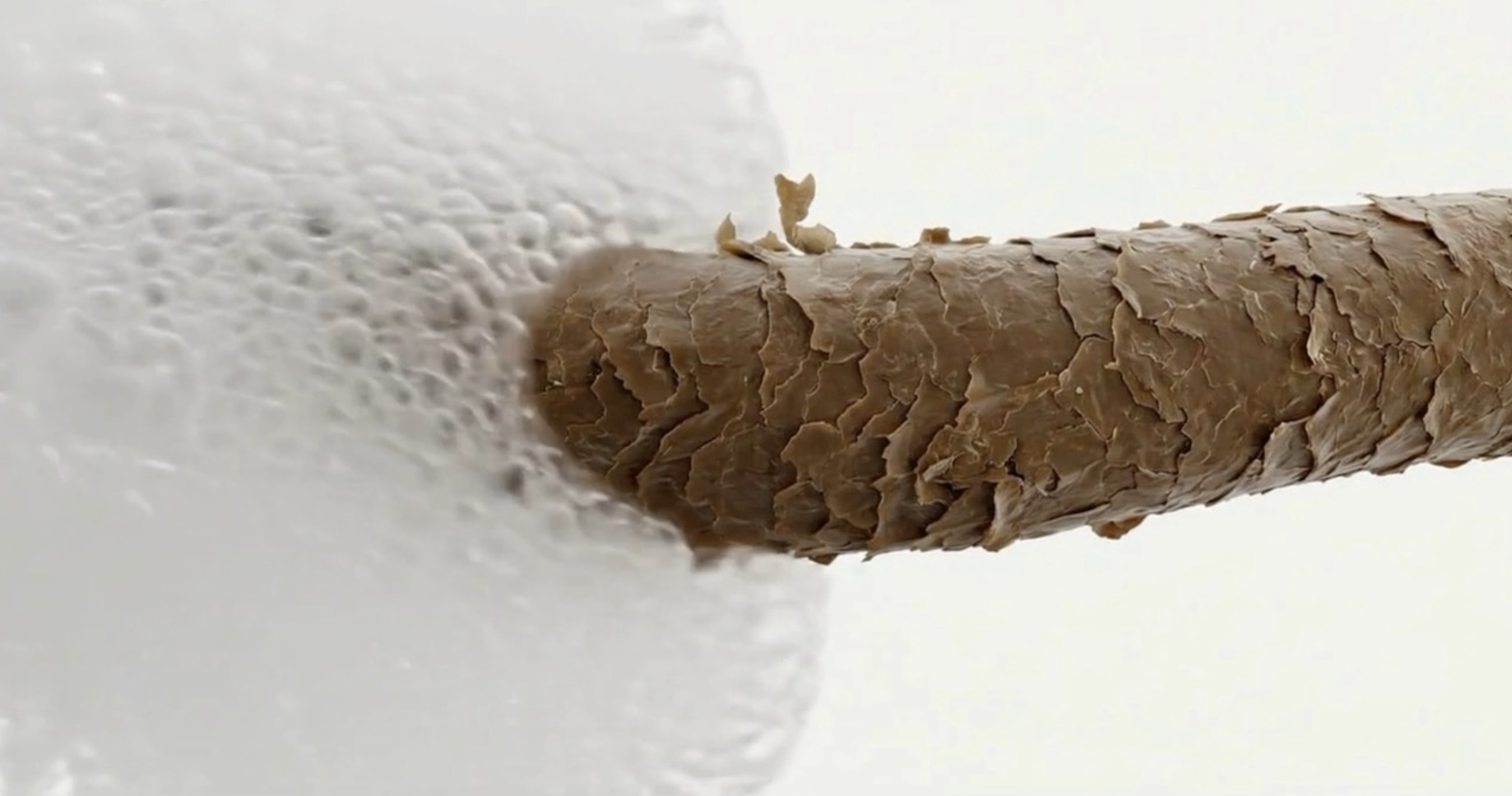
Enabling cosmetics and nutraceutical brands to create scientifically accurate mechanism-of-action visuals in days instead of months: “When good science can speak for itself cheaply, the whole category gets more honest.”
Founded by Felix Andersson and Sergios Aftsidis, illustraLAB is a way for companies to simplify and make more cost- and time-efficient clips or short videos. Essentially, Andersson shares, to show how an ingredient or product works.
This seems like very much a sign of the times to utilise AI in this way?
– I think the timing is really good, he says. The technology available, of course, enables us to deliver high-quality at a low cost in terms of the videos we produce. But we’re also living in an environment where cosmetics and nutrition are supposed to be science-backed. So it seems like everything’s tying together.
– One thing, just to put some context to it: these sort of videos, typically you had to pay €20,000 to ask a 3D animation studio to make them for you. But then these 3D animation studios were probably more used to making fashion videos, or any other sort of marketing videos, rather than illustrating how biologically, or physiologically, an ingredient or product is working. So it was quite difficult. We speak to clients now, and they all explain how expensive and time-consuming it was to make these sorts of videos, and they never turn out quite well. We managed to do this cheaply, fast, and of high quality.
Don’t you think these 3D animation studios will also realise the benefits of AI? How come we haven’t seen this type of solution yet?
– We encourage everyone to try to use the AI tools to make these videos, and I think it will quickly come to light that it’s quite difficult. We have built a proprietary AI model that enables us to make these videos. And it’s been quite time-consuming: we’ve been working on it for the last nine, ten months, building and cataloguing physiological actions and elements that are in the body that need to be depicted. So yes, AI helps us, but we need to tame it in the right way.
It’s quite early, of course, but what do you help brands with? Can you share a typical use case?
– We help cosmetics and nutrition brands, and the ingredient makers behind them, turn the real science of a product into an accurate mechanism-of-action video, in days rather than months, says advisor David Koo Hjalmarsson. Historically, as mentioned, that meant paying a 3D studio a lot of money for a clip that took forever and still didn’t get the biology right, because those studios are built for fashion films, not physiology. We’ve cut that cost by around 97%.
– The typical case has two sides. A raw-material manufacturer with a new active needs to show formulators and R&D managers at brands exactly how it works — that’s a sales tool. Then the brand takes that same science and makes it consumer-facing. Same underlying accuracy, two very different audiences.
What are brands looking for now in these sectors?
– Proof. The mood has shifted from ‘natural’ and ‘clean’ to ‘show me the evidence.’ Brands tell us their customers now ask how a product works, not just what it promises, and that ‘trust us’ no longer sells. What they’re missing is a way to communicate that science at the speed of their content calendar. They have the R&D; what they lack is the bridge between the lab and the feed.
And you touched upon it, the target group has to be quite broad: ingredient suppliers, consumer brands, and more.
– It’s quite broad, Felix Andersson agrees. We work exclusively with the cosmetics industry and the nutrition industry, so supplements, raw material manufacturers and finished products in those two industries. Nothing apart from that.
But I can see a future where we can also see these kinds of clips and short videos in webshops, given how curious and demanding the end consumer has become.
– This is the point.
When it’s more cost-efficient.
– Absolutely.
Because this has so far been solutions for B2B, perhaps up until now.
– Yes. And we stand on two legs. We do the videos for raw materials or ingredient manufacturers, for them to show formulators and R&D managers at the brands how the new ingredient works. But we equally work with the brands themselves to make the videos consumer-facing as well.

According to David Koo Hjalmarsson, the biggest shift now is that the end consumer has become genuinely curious – and genuinely sceptical.
– That’s pulling the ‘how it works’ explanation out of the B2B back office and onto the product page. I’d expect mechanism visuals to become a normal fixture in webshops the way ingredient lists already are, simply because the cost of producing them has collapsed. The broader shift is that in both cosmetics and nutrition, being science-backed is no longer a differentiator – it’s the entry ticket. The edge now goes to whoever can translate that science clearly and fast, he says, adding,
– According to me, we quietly level the field. Explaining your science used to be a luxury only the biggest R&D budgets could afford; now a small brand with genuine innovation can show it just as clearly. When good science can speak for itself cheaply, the whole category gets more honest, and that’s the part worth being excited about.