
The Verso Skincare founder encourages his team to play and experiment with the services that are reshaping how we work today. Here’s what he’s learned so far.
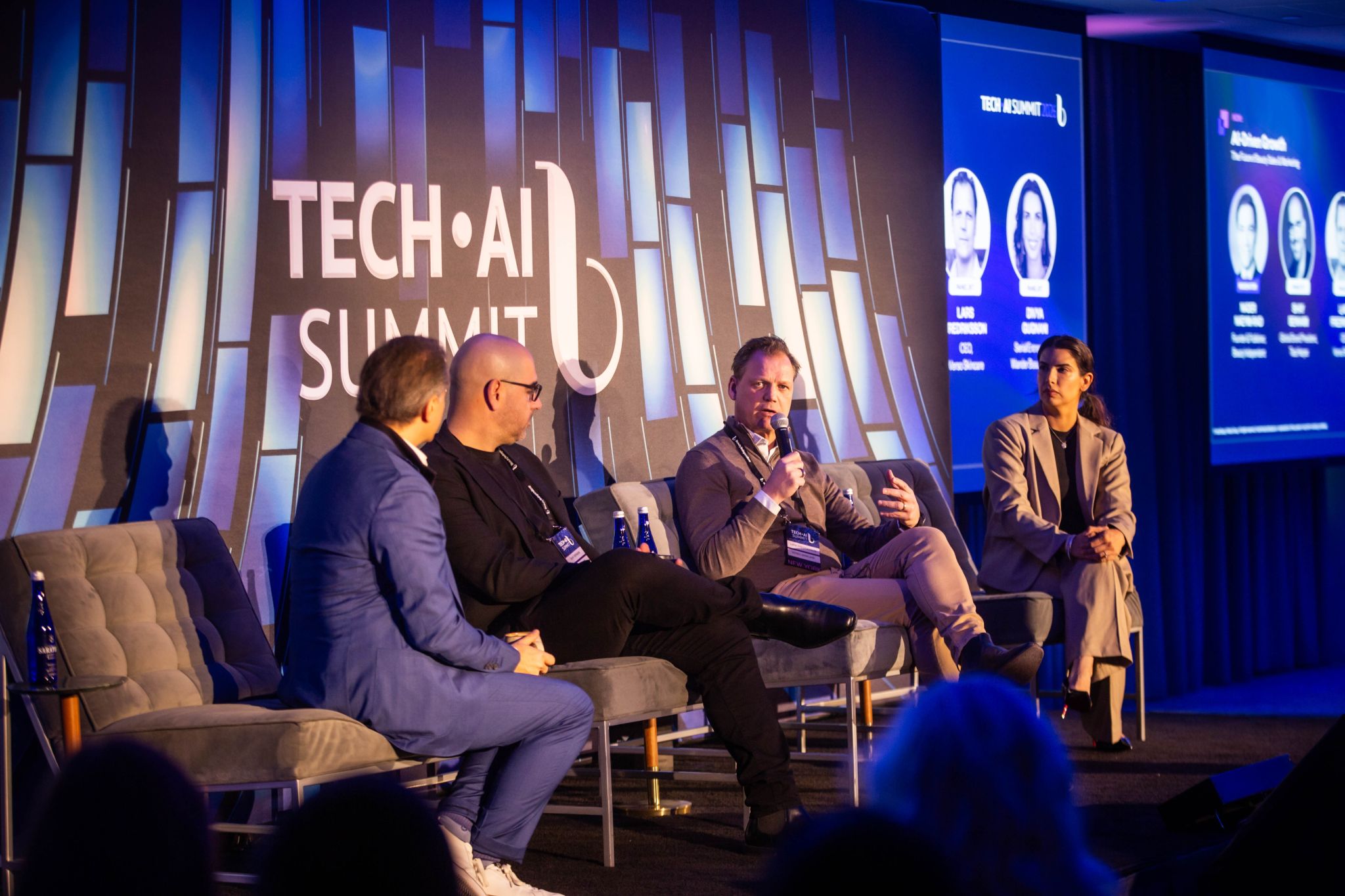
Fredriksson was invited to Beauty Independent’s Tech*AI Summit, the platform’s first event devoted to applying technology and AI across the entire value chain, to be part of a panel discussion. The topic: how he and his employers are using AI in their daily operations.
– It was about whether we’re using it for anything at all. And if we’re using it, how are we using it? Are we using ChatGPT to help us spell or to create emails? While we’re using AI in a much broader way.
You urge all your employees to have subscriptions.
– Yes. Everyone working with us should use AI in their daily operation to perhaps not improve themselves but rather to make them more efficient.
And you’re not telling them which service to use. They’re all different, can’t that be a problem?
– I think that the service you’re using is very individual and also depends on what role you have in the company. Personally, I’m fond of Claude. I think it’s the best when it comes to creating presentations, Excel sheets, and such. But I know there are so many more out there—ChatGPT, Gemini, Banana, Complexity—but for me, Claude has worked very well. It’s good to be more efficient and just to be helped, to look at AI as a service. It’s an assistant. Nothing else.

It can be easy to consider new technology as a gimmick. Can you take part in measurable improvements in these 1.5 years that you’ve used it? Or is it more to be aware of new technologies, while the real improvements will come in a few years?
– You can compare it with the development of how phones have evolved into smartphones. In the first place, all we wanted to do was just call each other. Then, we’re using data, and then there’s just more and more and more and more. Obviously, some of those are gimmicks. At the same time, some of the tools are great in improving performance and make the work a lot easier. I think it’s going to be the same thing here.
– When people first get in touch with AI and ChatGPT, and how well it is done, they are just being blown away. After a couple of hours, they stop using it as an email translator or to write email answers, because in the end, they make it faster themselves. But then there are things where I believe that it can really help out, to build dashboards or create reports. You can create something, and then communicate that something needs to be cleaned up. Instead of having an agency to do it or putting tens and tens of hours yourself, you can have an AI tool, which makes it more efficient.
Has the feedback been good from your employees? Or is it more that they’re urged to have it?
– I think they’re using it in a very positive way. Some of them probably think that they don’t need it for a particular reason. I just urge them to try to do it, try to use it whenever they feel comfortable with it. And, just to be fully transparent here: I don’t say that you should use it on everything you do, but really look at where you put a lot of hours and find that this tool can help you out.
Not for the sake of it, but also to be able to experiment with it?
– Absolutely.
Play with it.
– Yes. And in the beginning, we had a lot of fun in the office when we were searching or asking questions about Verso. A lot of them were wrong. So, we were urged to also answer, ‘no, this is wrong,’ you should not use Verso like that, to also teach the algorithm.
Business of Fashion stated how ‘GEO’ Is Beauty’s New ‘SEO’ when brands are rushing to generative engine optimisation.
– Yes! One takeaway from the New York summit was that there were quite a few companies there which are obviously a lot bigger than we are. And they often have a specific person, an AI person, responsible for making sure that they’re using the right tool, what they can do, and what they should not do with it.
– For everybody who’s on social media today, if you start asking questions about these things, you get flooded. ‘I made $2 million only with myself, and I set this up with Claude—here are the prompts.’ You’re asking for a presentation, and the presentation can be good. However, in the end, someone needs to execute!
But in the times we’re in, it’s tough for beauty companies, and this can also help them earn money.
– Yes, I’m sure. For us, it has been good in a way that we can monitor how we’re spending our money by using a tool that can build a model for following a specific campaign. We can ask it to help out to build a dashboard with certain KPIs and what we need to be in control of. That helps out a lot.
– Another takeaway from the event was that one of the biggest contract manufacturers was there. They have experienced an increasing number of people coming to them, saying, ‘I have this cream that I want you to produce and develop for me.’ When they start looking at it, they have realised that this is not going to work, asking the person, ‘Did you do this?’ ‘No, I asked ChatGPT to create a vitamin C cream, asking it for a recommendation of the best vitamin C to use in a cream.’
– I actually tried this myself afterwards, to ask AI, and it doesn’t really come out right. The AI is not there yet! There are so many hurdles in order to get a good formula. And don’t take me wrong, with everything that is happening and the enormous pace, I’m sure it’s just going to be a matter of time before somebody can do this. But today, it’s not really there.
And for that contract manufacturer, it was an improvement that they could use their expertise to show the brands and brand owners how to do it.
– Yes. We all know that in this business, depending on who is producing what and what kind of raw material, the raw material acts in a different way depending on who the supplier is, and also where it is produced. Is it produced in Sweden? Is it produced in the southern part of Spain? That could matter. How has it been stored? There are so many things that play a role. It’s not gonna be easy just to say, ‘I want to have a vitamin C cream, give it to me.’ Let’s say they come up with the right recipe or formula. But that also has a prerequisite saying that you need to use the raw material from this supplier. It needs to be produced in a machine that comes from this supplier, because that’s how this formula is going to work together.
You could have the best raw materials in the world, but you also need a good formulator.
– Absolutely. And I’m obviously not a chemist, but my experience is that when I speak to formulators, it’s so many trial and errors, and so much work. I know that it goes back and on, back and on, back and on, before we get it right. So, again, I wouldn’t say that we are there yet with AI, and that was confirmed with that manufacturer, but there were a lot of other things that were interesting in the summit.
Yes, you were contacted afterwards by other bigger corporations.
– Yes. And we had conversations where we could share with each other, ‘What are you doing?’ ‘OK, are you using Claude for that, or how are you using it?’
For the end consumer, Verso has partnered with the Swiss AI startup Inference Beauty to deliver product recommendations directly to the customer.
– We previously ran our own skin test in-house, but the model wasn’t scalable, and the cost structure didn’t hold up as we grew. Inference Beauty had built exactly the infrastructure we needed: a proprietary algorithm combined with an app we can layer our own data and questions onto. That means the recommendations aren’t generic; they’re trained on the same logic and product knowledge that sat behind our original skin test, just in a far more accessible format.
Today the customer simply uses the scanner on their phone or computer, answers a few targeted questions, and gets a product recommendation tailored to their skin. It’s a more precise experience for the consumer, and a more efficient one for us.
– This is scalable, and a technology that I think can be improved and is already being improved all the time. We now see how people are using it, plugging it in, and it results in transactions.
That’s the key.
– That’s the key.

And finally, in a year from now, what would you predict for AI in beauty?
– I think the main thing that we see is that a lot of brands already today are using AI in their advertising and production in terms of photography and everything around that. As we know, social media is such a beast, and it’s almost impossible to feed it, so there are a lot of services out there to help you provide content that is personalised to your brand and your customer. Just in the past 6 months, we’ve seen so many things happening there, and I think that even in the very beginning, we could see, ‘well, this is AI-generated.’ That is obviously going to be more and more difficult.
Sure. The future for a still life photographer is unclear.
– It is tough.
Yes.
– Unfortunately.
Yes.
– But also, from a brand perspective, it’s just difficult to know how we should relate to this. We want to be authentic as well. That is always a balance.