
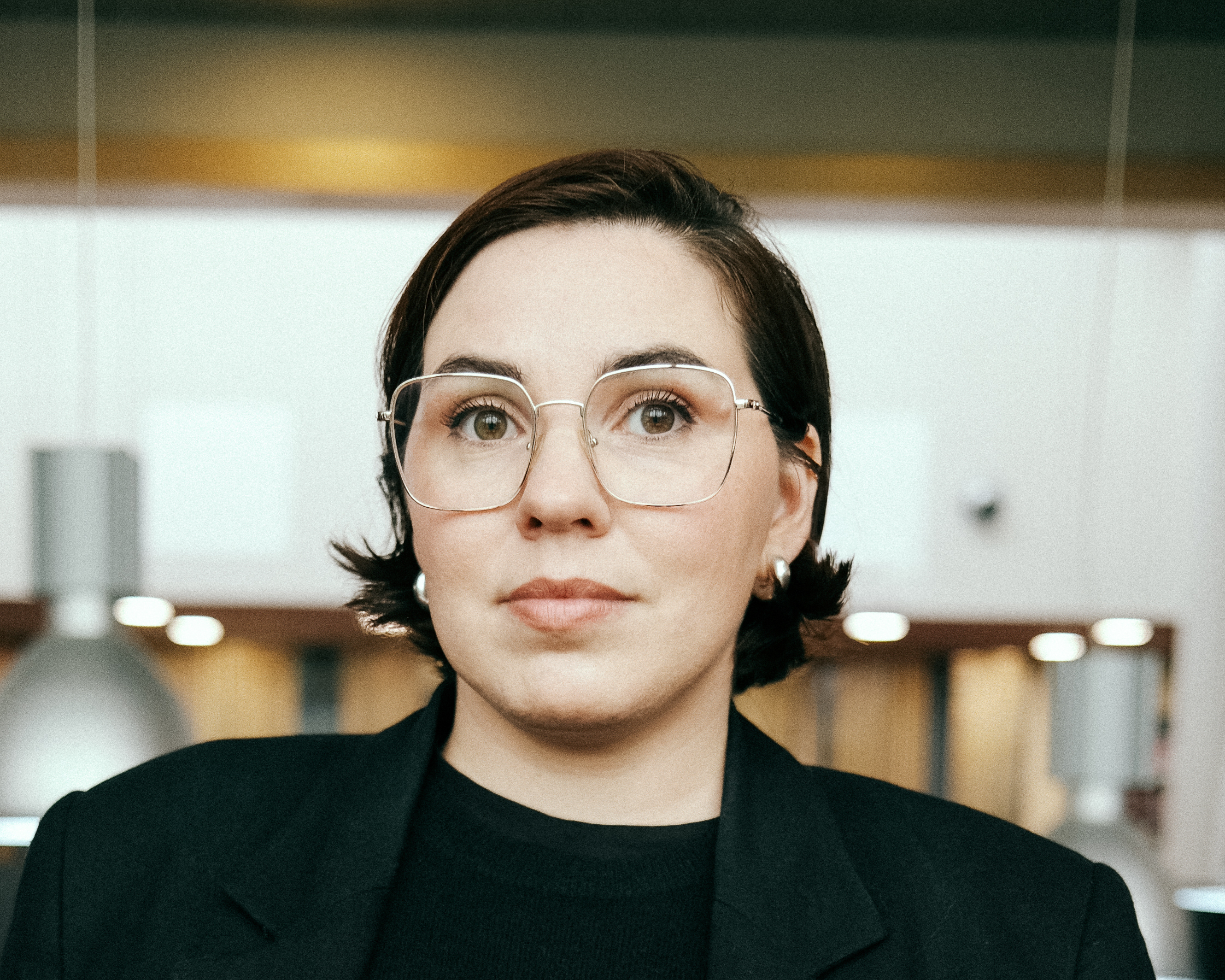
Although there is no single, inherently Swedish aesthetic, Paris-based beauty packaging expert Hanna Billqvist sees certain values present in Swedish culture and society that are often reflected in the packaging design.
Billqvist is the co-founder of Arieto Studio, whose expertise lies in product and packaging design. With twelve years of experience inside the French beauty industry, including time within L’Oréal’s innovation packaging team, the design studio combines strategic thinking with a hands-on product understanding. The goal is to help brands translate their core identity into physical products and engaging consumer experiences.
You recently presented a special LinkedIn series. What did you publish?
– It’s a collection of posts where I look at Swedish beauty brands from my unique perspective as a Swedish product designer who has spent most of my career in the French beauty industry. I’m genuinely impressed by what Sweden produces in the beauty space, and in packaging in general, and I wanted to share that. In the series, I decode the packaging, CMF (colour, material, finish), and visual context of 11 brands, and what that signals to consumers, Billqvist shares. She continues:
– My key takeaway is that there is no single, inherently Swedish aesthetic, but I do see certain values present in Swedish culture and society that are often reflected in the packaging design. Honesty, trust, and, to a certain extent, modesty are some of the traits. I think that in Sweden, excessive self-promotion can create distance rather than desire from a consumer perspective, so simplicity signals credibility. The tone of voice is often calm and straightforward, with few exaggerations and a reluctance to over-decorate.

Saturated landscape, ever-so-demanding end consumers, and more and more limited shelf space. Is it fair to say that beauty packaging is more important than ever?
– Yes, for all the reasons you mention. Packaging has become one of the most important levers for brands to build trust and stand out. Today, consumers discover new beauty products primarily on social media, and the buying decision is often made before the consumer has ever touched, smelled, or sampled the product. Some statistics suggest that over 70% of buying decisions are made online. When brands are competing on visual impact, the packaging and what it signals become extremely important.
– In addition to visual impact, there is, of course, the sustainability aspect. The packaging for the entire FMCG (Fast-Moving Consumer Goods) market has a significant environmental impact. This reality always needs to be a core consideration when creating new products or renovating existing ones.
I visited the PCD Paris beauty packaging fair the other week. It was great! A lot of innovative things and new solutions. However, the main impression overall was that it’s, to a large extent, business as usual. Virgin plastic, standardised solutions, and little room to think outside the box for the big suppliers. Am I too harsh now? Orm, what’s your view of the current state of beauty packaging?
– When we only see what suppliers show at trade shows, it can look like not much is changing. I do think there is so much going on behind the scenes, though. But suppliers alone can’t drive innovation; there must be a synergy between brands, suppliers, and designers for real and exciting things to be produced.
– In general, I see a few different things happening. Brands are increasingly feeling the competition from professional salon and aesthetic treatments that are becoming more accessible and potent, which is a big driver to innovate on the formula side. With new formulas come new ways of application, new rituals, and new packaging that need to communicate the innovation and potency.
– The big challenge of recyclability and the reduction of material is also very present. The sustainability issue can be tackled from many perspectives. A lot of brands are launching refills, and it is finally becoming more mainstream in the beauty industry to refill than it was just a few years ago. But there is still so much room for companies to improve the refill model. How can we make it more appealing to buy a refill than a new product? How can we make refilling a part of the brand story and something enjoyable?
You spent several years in the L’Oréal packaging innovation team. What was it like? And, what innovations are you looking for now in beauty packaging?
– It was very exciting and challenging, Billqvist shares, and it exposed me to the complexity behind what appears simple when we see it on the shelf. There are so many initiatives that reach consumers much later, so it’s pivotal for big groups to be years ahead in their development.
– Innovation could be everything from looking at microtrends and harnessing new organic consumer behaviour, to finding the pain point in existing packaging and redesigning it for better or more ergonomic use, to finding new ways of using materials, or to designing new ways of applying formulas, and, of course, reducing plastic. It was an extremely vast and very rewarding area.
– What I’m personally looking for now is packaging that significantly improves sustainability without compromising the user experience.
Another key focus for Billqvist and her team is obviously UX and sensory design.
– When designing primary packaging, like jars, tubes, lipsticks, palettes, and bottles, which are objects that are touched, applied to our faces and bodies, and used over and over again, it’s about ensuring the user experience is essential, she says. We look at the whole user journey of a product: from when the consumer first sees it, on the shelf or online, through all the stages of use, to the end of life when they recycle or discard it.
– It’s different for every product category, but it can involve designing the opening gesture, ensuring the right amount of product is dispensed, optimising the ergonomics of holding a lipstick or a liner, making the refill process intuitive, or just taking into account that the product is often carried in a bag, which means more wear and tear to the surface.
– It’s also about the sensory experience and how it makes the user feel. It’s in the details people don’t consciously analyse, like how the object sits in the hand, and how weight and material set an expectation for the formula or the product’s efficacy. We think about and design for all these scenarios, with the goal of creating products that are delightful and intuitive to use, stand out on the shelf, and are optimised for sustainability.