
We’ve reached a point where video commerce stops being a trend and becomes the infrastructure of Luxury Retail.
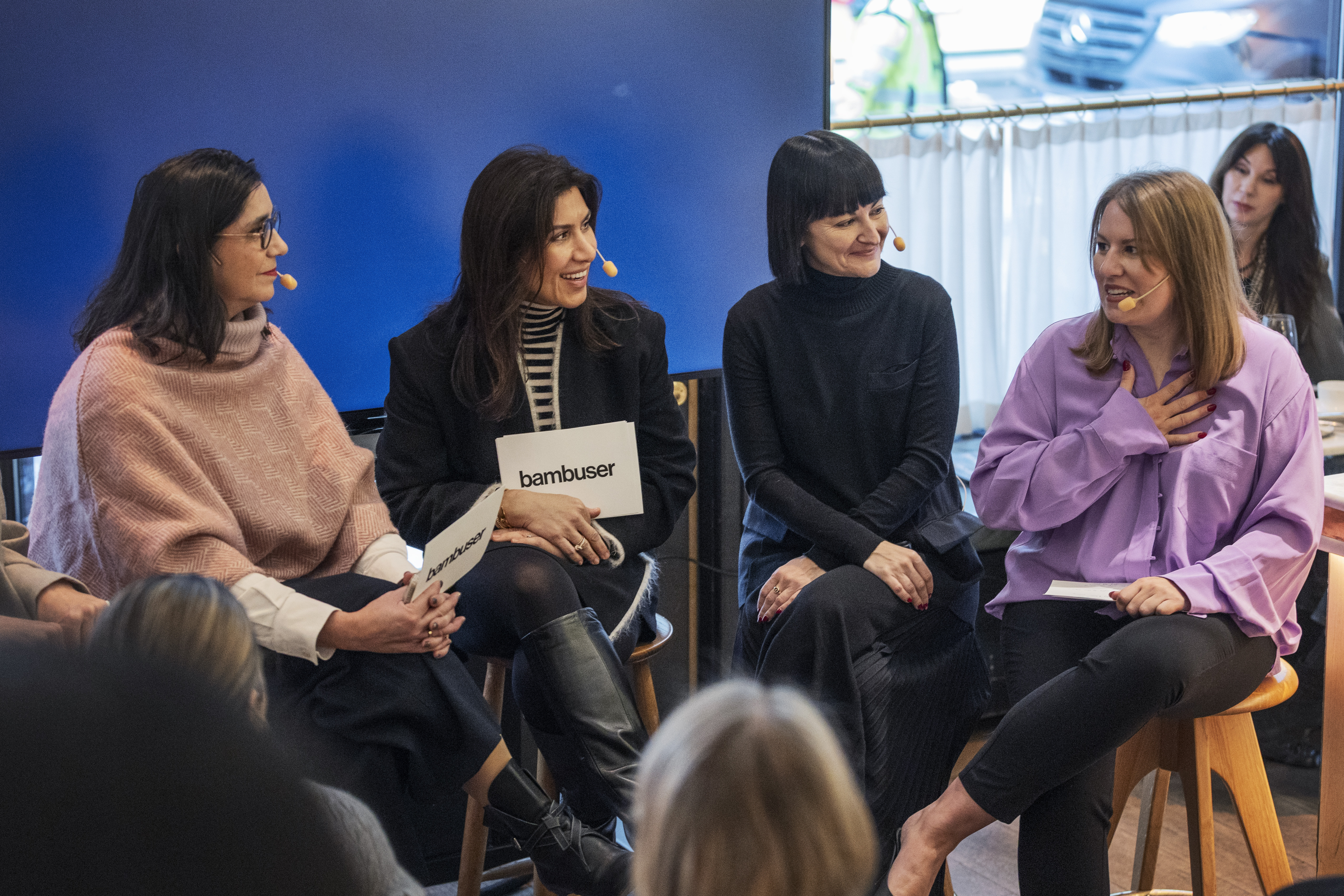
When Bambuser gathered industry leaders at Villa Dagmar in Stockholm recently for a fireside conversation on the future of video commerce, it wasn’t framed as speculation. It was positioned as a status update. “We’re not talking about tomorrow,” as one panellist put it. “This is already the retail infrastructure brands operate in.”
Moderated by Emilia de Poret, the discussion brought together Maryam Ghahremani (CEO, Bambuser), Kate Hurrell (Head of E-commerce, Victoria Beckham Ltd), Natalie Plenier (Director of Digital, E-retail, Omnichannel and Client Experience, LVMH) and Kay Barron (Founder, VVEND).
Across luxury fashion, beauty, and high-end retail, their message was consistent: the customer journey is being rewritten through video. And crucially, it is not the technology alone that’s shifting behaviour. It’s the fusion of technology with human presence.

From hype to baseline
Three years ago, liveshopping was treated as a novelty in Europe: experimental, mildly chaotic and definitely “new.” Today, the channel has matured into something entirely different: a high-performing engine for engagement, conversion, and brand storytelling.
Brands no longer ask if they should use video commerce — they ask how they can integrate it deeper across their ecosystem.
According to Bambuser’s panel, the acceleration has been driven by three forces:
• Longest engagement time of any digital format
• Lower return rates because customers see the product demonstrated properly
• Infinite scalability, from global broadcasts to 1:1 sessions
Beauty and fashion, where texture, finish, and application matter, have seen the most dramatic impact. “Fabric feel” and colour accuracy become visible rather than abstract — and that changes everything from conversion to loyalty.
Human first: the new retail demand
One of the panellists noted that across global customer interactions, the second most common request is simply: ‘I want to talk to a human.’ It reflects a broader reality in luxury retail – even with advanced digital tools, customers still seek expert reassurance and personal connection.
It highlights a paradox at the heart of modern retail: customers are perfectly comfortable with AI, automation and frictionless UX, yet they increasingly expect access to real expertise. Not influencers polished into brand mouthpieces, but the people inside the brand who truly understand the product.
Bambuser’s strongest growth area now lies in one-to-one shopping:
• Personal consultations
• VIP sessions
• Password-protected retail events
• Post-drop access for top customers
This isn’t “clienteling 2.0.” It’s retail intimacy — at scale.
Shoppertainment: where content and commerce merge
A key point from the discussion: Successful video commerce is not about perfect sets or polished scripts. It’s about micro-shows driven by authenticity.
Winning formats include:
• Charismatic, human hosts
• Tight curation (“just show me what I care about”)
• Mobile-first production
• Storytelling that sparks desire rather than pressure
A host in good lighting with a well-charged phone can outperform a glossy studio. It is not minimalism — it is precision.
Data as luxury’s new superpower
The strongest strategic shift surfaced in the data discussion. Bambuser’s platform reveals:
• Who watches
• Who converts
• Which products trigger “moments”
• When to adjust pacing, tone or narrative
For global brands, this is gold: the ability to iterate in real time without external creators or expensive testing cycles. “It turns out the golden content isn’t outside the organisation,” one panellist observed. “It’s already in the brand — you just need the tools.”
Asia invented it, AI will redefine it
Livestream retail didn’t originate in the West. Asia pioneered the playbook. The next leap will be AI-powered through:
• Virtual try-on
• Visual search
• Personalised product recommendations
• Hybrid AI/human hosting
• Automated pre-production workflows
The future is not about removing humans — it’s about amplifying their impact.
From inspiration to infrastructure
What emerged from the conversation is a reframing of the retail landscape: video is not a campaign tool. It is a foundational layer in how brands build relevance, community, entertainment and trust.
• Victoria Beckham Beauty uses live video as a way to deepen product understanding and build community around launches.
• LVMH brands see video as a way to bring high-touch service and expertise to markets where in-store experiences are limited.
• Bambuser’s clients increasingly use video as a conversion tool rather than a marketing experiment.
• The strongest results, according to the panel, come from formats anchored in real brand experts, not external influencers.
For the customer, the benefit is simple: a digital world that feels more human, personal, and textured than traditional e-commerce ever allowed.
Key takeaways
1. Video is no longer a trend; it’s infrastructure.
– Luxury retail now relies on video as a core component of the customer journey.
2. The human layer is the competitive advantage.
– Consumers want expertise, presence, and authenticity — not just content.
3. One-to-one shopping is exploding.
– Tailored sessions, VIP access, and micro-clienteling define the next chapter.
4. Lightweight production outperforms heavy studios.
– Precision, charisma and narrative trump perfection.
5. Data is the new luxury currency.
– Brands can iterate in real time and know exactly what drives conversion.
6. AI will redefine what Asia pioneered
– Hybrid human/AI models will become standard in the next retail evolution.
7. Video isn’t a campaign tool. It’s editorial, experiential and relational.
– It merges storytelling, commerce, and community into one seamless system.
Words: Hélena Yllmark
Photography: Caisa Rasmussen