
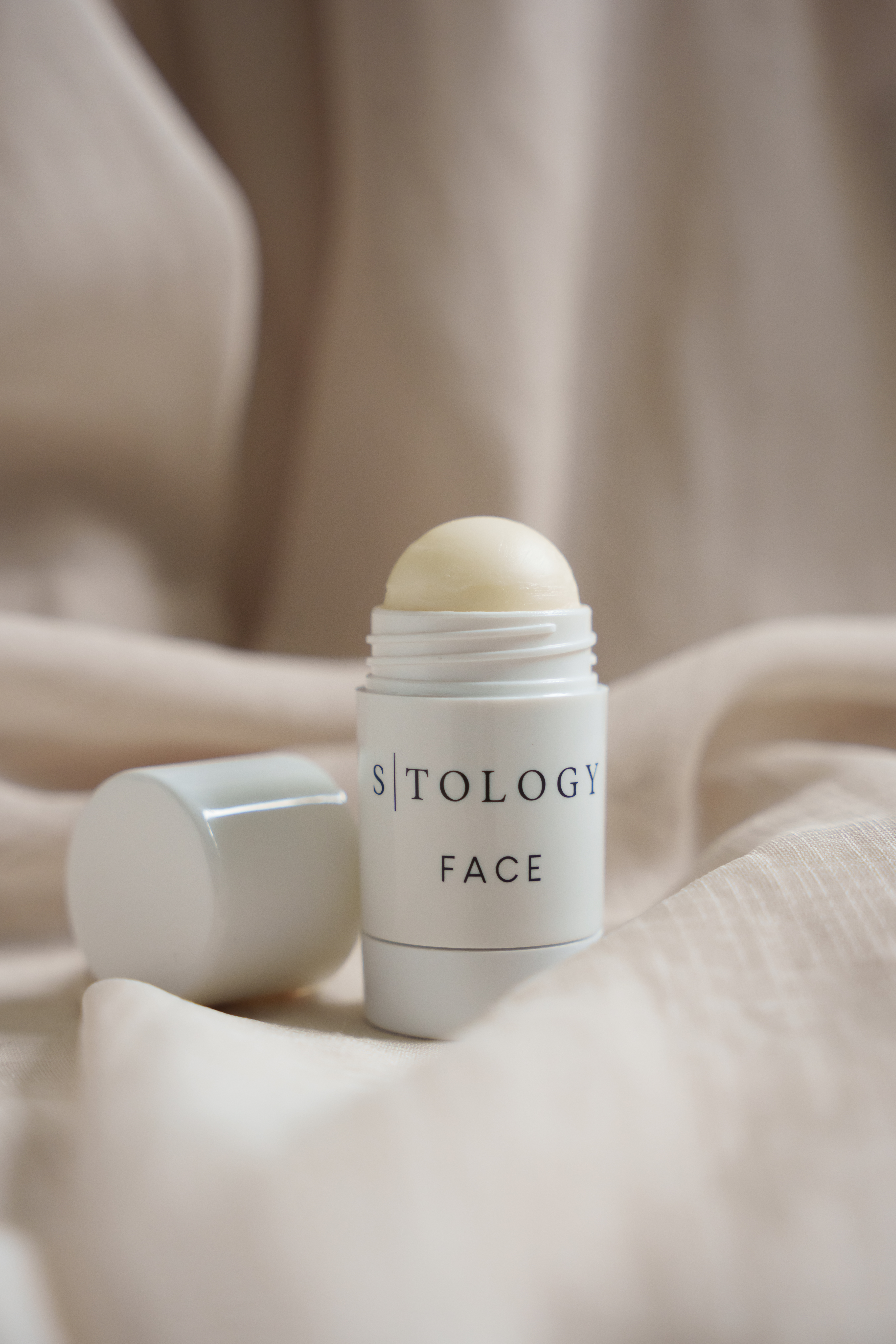
The signs are there, and for a good reason. “Solid products may look and feel small, but if formulated right, the product deposit on the skin is smaller,” says beauty entrepreneur Maria Lund.
Around five years ago, media outlets across the world started dubbing waterless beauty a potential saviour, both for the planet and the skin. Since then, the market opportunities and challenges have remained slightly the same, and so has the opportunity for any brand owner who manages to crack the code and bring solid-based products from a buzzword to changing the end consumer’s perception of what beauty products shall look like.
Maria Lund holds a Bachelor’s degree in Cosmetic Science and has over ten years of experience helping other brands develop beauty products. Her own brand, s|tology, is a contemporary, solid-based beauty brand. The initial range of wax perfumes has now been accompanied by a new skincare line, where the Retinoate Stick is a gentle, oil-based formula with HPR retinoid and bakuchiol, and the Moisture Barrier Stick is an SOS stick with fermented oat and oak root extract. Lastly, the Defining and Nourishing Lip Treatment is a nourishing balm with mustard seed extract.
– It’s crafted with moisturising waxes, butters, and oils that care for and nourish the skin, says Lund. We are proud to control every aspect of our product journey, with our development lab in Stockholm and manufacturing site in Halmstad on the Swedish west coast. Our lightweight, pocket-sized products are designed for modern life and to fit seamlessly into a daily routine while providing a luxurious experience.

There can be many good reasons to launch beauty products in solid form.
– Yes. The idea that started s|tology was a travel-friendly fragrance that is easy to bring in hand luggage. Solid is great for travel and on-the-go but also for ease of use. The fragrances, for example, are pocket-sized and can be applied anytime, anywhere, without disrupting the surroundings. Solid products may look and feel small, but if formulated right, the product deposit on the skin is smaller than with a liquid product and the product last just as long despite being smaller in size.
Yet, a big challenge is how to change the behaviour of end consumers who are used to conventional skincare products. What’s your view on that?
– Yes, you are right. It requires a lot of education, and this has been our biggest challenge, especially since we sell online. We have been working a lot on showing the products being used in videos to make them easier to understand. When we have had the opportunity to show the products at different events and the consumer can try them for themselves, the feedback has been overwhelmingly positive. In the hands of the user, the products speak for themselves, and we have to try to convey that through the screen.
– We have noticed that consumers often have a curiosity to try new things outside of mainstream, such as targeted products, new innovations and concepts. This opens up opportunities for smaller brands such as ourselves.

Based on your experience, what else are you looking at now?
– Sustainability is still a hot topic, and consumers are becoming more aware. ‘100% green’ is not always the best and does not always mean more sustainable. We see options such as biotech, where, for example, plant sugars or bacteria can be used as starting material and fermented into powerful actives, as well as upcycled ingredients where the cosmetic industry uses side streams from other industries to produce new ingredients. Sometimes ingredients combine both biotech and upcycling is used in the same ingredient, Lund shares. She adds:
– For the brand, there’s a lot of optimism in the market. We feel this and have so many ideas and plans on how to create even more curiosity and more innovation. There are already several new launches in our pipeline, and we see many possibilities for 2026.
