
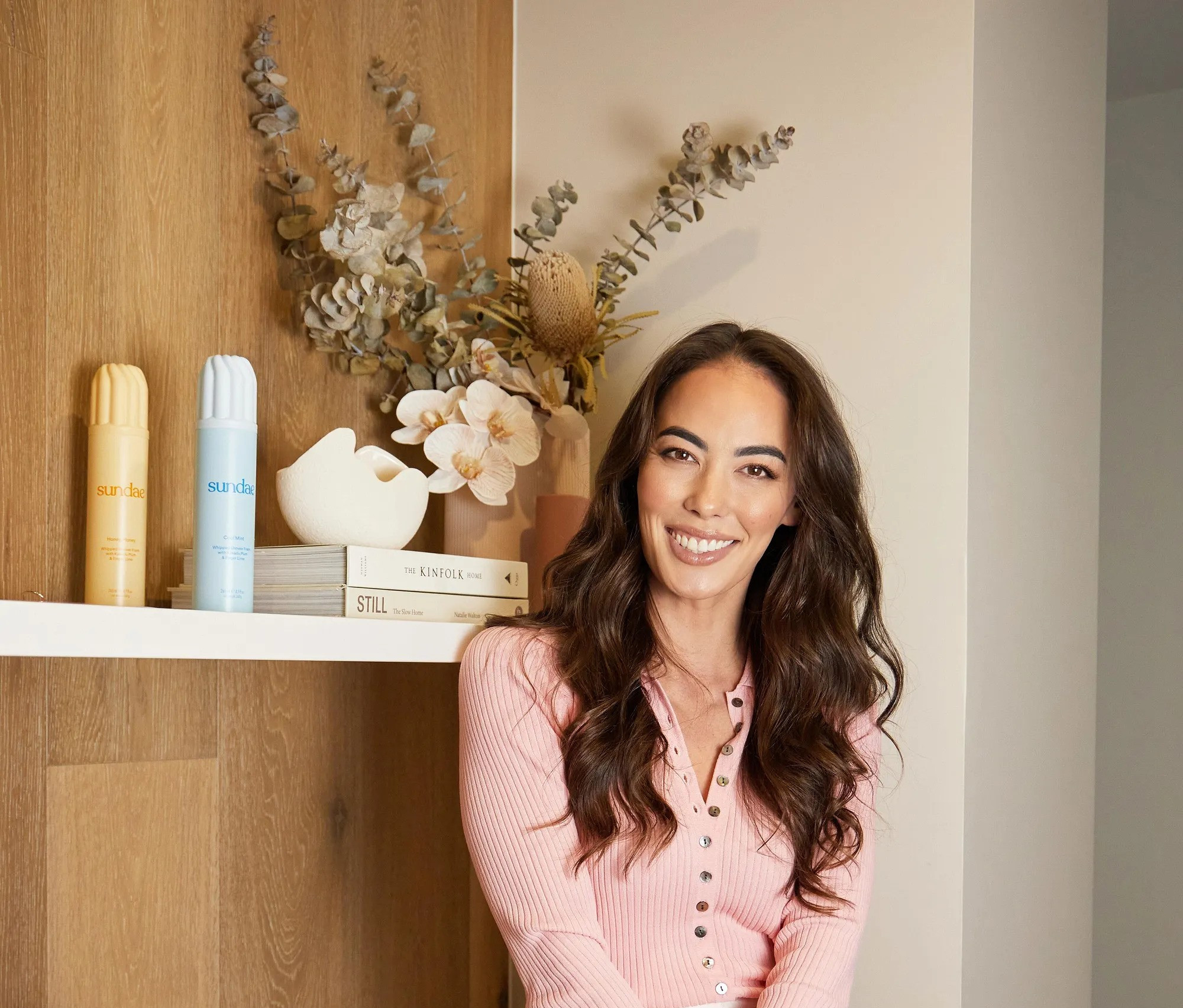
The success story of the Australian brand is a compelling example of how a fresh idea and strong execution resulted in rapid growth. The visionary behind explains the keys to reaching this far.
Sundae was born during the height of the COVID-19 pandemic, in 2021, out of the idea of mixing beauty and fashion with food concepts—the new launches for Christmas are called Gingerbread and Candy Cane—and whip the everyday body care routine into a joyful activity. According to co-founder Lizzie Waley, one key to success is to be highly intentional.
– We innovate only when the product actually moves culture — not just adds another SKU to a shelf. Now, we’re building Sundae more into a ritual system — not just individual products. So you’ll see more sensorial, dopamine rich, body self care that is built to be fun and usable daily. You’ll see candy-coded minimal steps versus complicated routines. We also have some extremely exciting drops where the scent architecture is being built with niche perfumers — but democratised into unserious, playful formats.

Can you take us through these last few years; what have been the keys to success for you?
– First, modern Gen Z body care is emotion first. We serve a shift where personal care is becoming a hobby, a micro joy, a mood hack — not a chore. Our POV is: body care should be low stakes, high pleasure, easy to use daily, low cognitive load, maximal sensory reward. We stay culturally fluent every day — not quarterly. We talk like humans, not like marketing decks. And we don’t shame the body — ever. That is a huge unlock.
– Hyper growth teaches you that focus is everything. Saying no is where most of the value gets created. The biggest learning: brand strategy is not what you add — it’s what you protect.
What is the sector like now? Can you share an overview?
–Body care is having its ‘skincare 2019 moment.’ Explosive, culturally relevant, creative, deeply social-native. Still very under-premiumised and under-perfumed compared to fragrance and face — which means massive space to build. The challenges are price elasticity volatility, retailer SKU productivity pressure is real. You need to have velocity — not just aesthetics.
Recent reports suggest that fragrance hybrids are emerging as a fast-growing crossover category, blending fine fragrance with functional benefits. Do you see this as well?
– Yes, and it tracks with everything we see. Fragrance is becoming multi-format and use case based. We also see ‘fragrance mood utility’ becoming normal language: soft reset, study brain, sedative calm, flirt mode, and so forth.
How’d you explain the recent rise of body mists?
– It’s the accessibility of fragrance. Low commitment, affordable price, high repeat usage — especially for Gen Z who layer, experiment, and play.
And what do you predict for body care?
– Sensory maximalism as wellness replacement, body category premiumisation without the moralising, and faster cycle co-creation with community. Also, physical retail that is experience-first, not shelf-first, and ritual minimalism: less steps, more joy per step.