
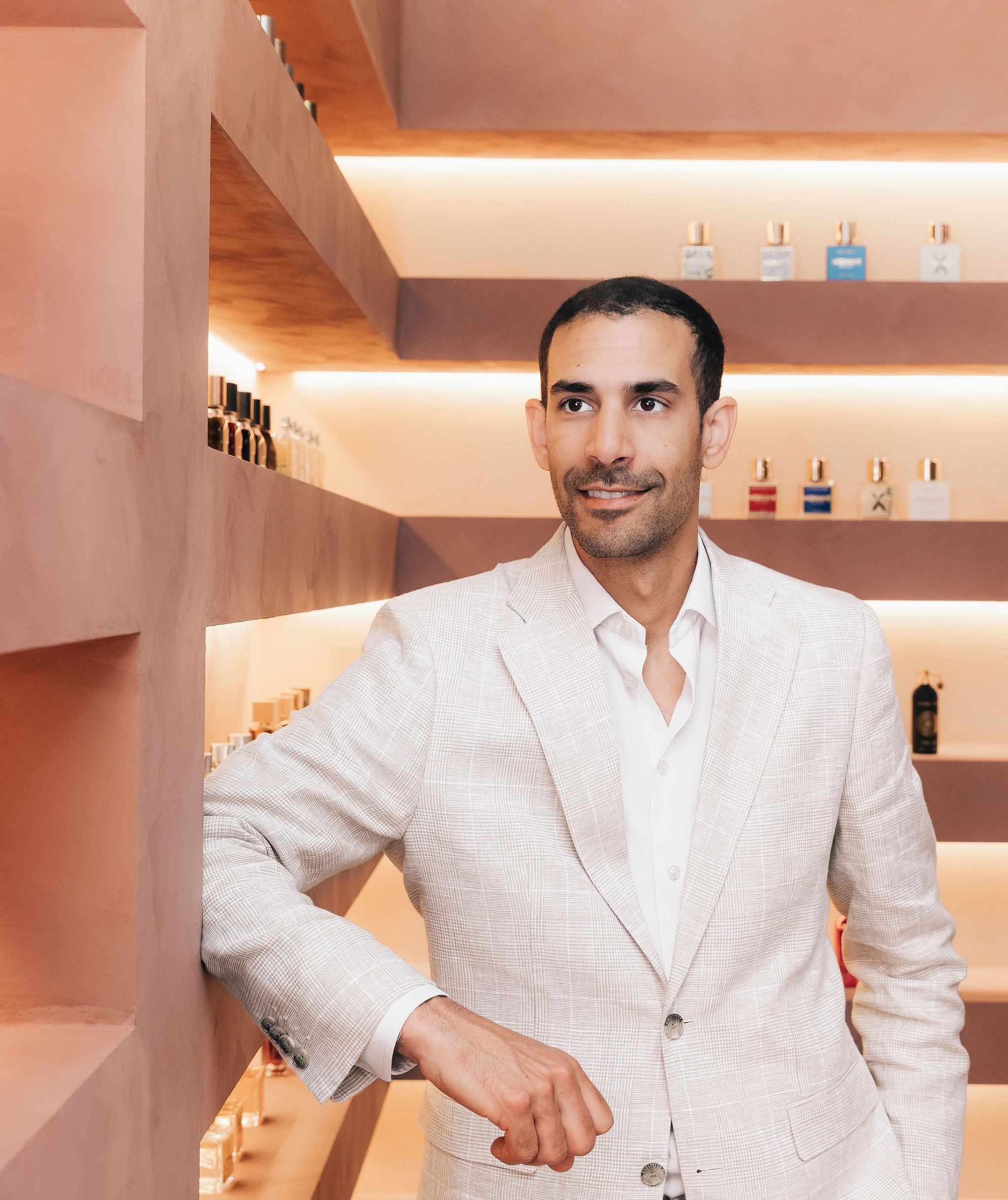
We speak with leading fragrance and beauty retailer Parfym.se about the major push into physical retail, aiming to grow even bigger at “the most competitive beauty market in the world.”
Parfym.se celebrates 20 years with the opening of the second brick-and-mortar, and its first flagship, spanning over 275 sqm in central Stockholm.
– We’re one of the first pure players in the beauty market, says Jonas Häggqvist, CEO. We began our journey in 2005 and at heart, we’re an e-commerce company that has pivoted into retail. Fragrance has always been our core and main category; we’ve sold millions of bottles of perfume since the start. We’re quite well known now, at least in Sweden and Finland, and we’re in Norway since a year. The store that we have in Gothenburg since 2019 has been performing really, really well and has created an opportunity for us to do more than just sell fragrance; to meet the consumer, build a connection, and guide them.
In order to be relevant in brick and mortar, in the saturated retail landscape, you need to create a destination.
– Yes, we’re talking about it a lot, that we want to create an environment where you don’t have to feel stressed or pushed to make a quick decision of purchase. It’s rather a destination for exploration of fragrances and beauty, says Lina Hasic, CMO and Head of E-commerce.
– Perfumes have also become so much more, says Malin Magnusson, Retail Manager. Just three years ago, there was a smaller assortment. Now, there’s a lot of them—the classic perfumes that everybody knows and niche with even more work behind—and people need guidance to find the right one.
– We’re all different when we buy things, no matter what we’re buying. Some of us just like to go into a store and we already know what we want to buy while some like to take our time, indulge, and be inspired. This is more of a store where we want to inspire people, the opposite to just pick a product quick on the shelf, pay, and go, says Häggqvist.

A lot has happened throughout your 20 years. Where are we now in the market? How would you describe it in Scandinavia?
– Scandinavia in general, Häggqvist continues, is the most competitive beauty market in the world. We have at least 10 serious local players that have been around for a long time. That puts pressure on everyone to continue to evolve, innovate, and to focus more on experience rather than just pushing products. It helps us to be on our toes; what’s good in Scandinavia yesterday will not be enough tomorrow. It’s a challenging environment, for sure, but also a very exciting environment to be in. If we don’t step on the gas, we will be forgotten. At the end of the day, retail is all about building trust and relationships.
In beauty in general, and fragrance in particular, we now see a lot of younger consumers, from Gen Z and Gen Alpha. What’s your view on this shift?
– Two years ago, we saw an enormous increase in the young men, primarily also showing a greater interest in fragrances and more expensive niche perfumes. We’re also trying, both online and in the flagship, to showcase a wider assortment so that you’re not being forced into going to the more expensive end. We’re rather showcasing more of a full scale price ranges and size variants, says Hasic. She continues:
– We’ve seen the trend, but we also see that it might not stay anymore. It’s not as relevant—we saw a peak two years ago, but now it’s slowing down a bit with the niche focus. Rather, there’s a general interest in fragrances that we see in the younger audiences.
– What’s interesting is also that they’re so knowledgeable. Going back 10 or 15 years, the young consumers didn’t know that much. Now, they know the perfumer, they know the ingredients, they know the story behind the brand. It’s more like art for them rather than just buying product, Häggqvist shares, continuing,
– On TikTok, you find a lot of ‘fragrance-tokers’ who are really influential and have a lot of credibility and following for the way they really focus on how the fragrance makes you feel. It’s a lot about individuality, and the trend that we’re trying to jump on is to make sure that it’s a tailored experience, not just a stock, a shelf, and a product.
– A year ago, Hasic says, we launched our first variant of our Parfym AI. Through that tool, we can see what type of topics people are asking about. What is interesting, as mentioned, is that the consumers are very knowledgeable. They ask a lot about the heritage of the perfumes, who the perfumer is and what he or she has made, and more of a historical relevance. That has also led to us developing as a company and what we’re offering to our consumers. We take insights from it and launch new areas of content on site that we also now brought into the store, such as storytelling and the ability to learn about the fragrance notes. It has inspired us to improve and develop our offering.
And this tool was in the form of a chatbot, using AI to improve the consumer experience?
– Yes. And in our flagship, she continues, if the consumer doesn’t feel comfortable talking to the people working there, we also have customer stations with iPads to pick a product, scan it and learn more about it, such as the perfumer and fragrance notes. It’s a mix of digital and physical.
Given that you’re present in several countries, what are the differences between them?
– Very big, Häggqvist states. It’s a very different buying behaviour in Sweden, Norway, Denmark, and Finland. In Finland, the hair care industry is almost as big as in Sweden, despite having half the population. Norway and Sweden are quite even across all categories. Fragrance is the smallest one—the key reason, I think, is that you don’t buy a new fragrance every month as you can do with, say, a mascara. We do tend to see that Norwegians buy more expensive, more niche, and more premium products compared to Sweden and Finland. We do see an increased trend in Sweden for that as well. Perhaps less is more; it’s better to invest in something that you really love and can keep for a while.
And what kind of fragrances do they like?
– It’s fairly even, Häggqvist continues. 6 months ago, vanilla was really booming and it was in trend—and then it shifts to something else. When you sell beauty, the trends shift really fast, and we don’t really know the source or the reason why they shift. It’s like fashion—different seasons, different needs—and that’s what’s exciting. Nothing remains the same in our industry.
– Vanilla has been with us for a long time, and now we see patchouli and amber, Magnusson shares. Everybody wants amber, but they want vanilla within and a fresh top note. I don’t think it’ll change that much. The younger boys like very heavy perfumes—they want patchouli, woody—while the girls want more sweet and vanilla. There is not just one sort of perfumes, but all of them depending on who you are.

And what’s the next thing to follow?
– I think we will talk a lot more about consumer behaviour driven in different generations, Hasic predicts. And, what type of channels do these consumers come through?
– Definitely, Häggqvist agrees. Perhaps also more scent profiling of yourself to learn more about what you really like. If you buy jeans, you may like skinny or baggy, and you learn more about your style. That might going to happen in beauty as well, that you learn more about your style.
– It’s a lot up to us to improve the use of technology when also dealing with the physical interaction, he continues. If a consumer don’t to make a purchase today, how can we help them anyway? How can we leave them with something that they can take with them? What is my scent profile? That’s where technology meets the real world. If we improve there, much more can be done towards understanding people’s style or preferences.