
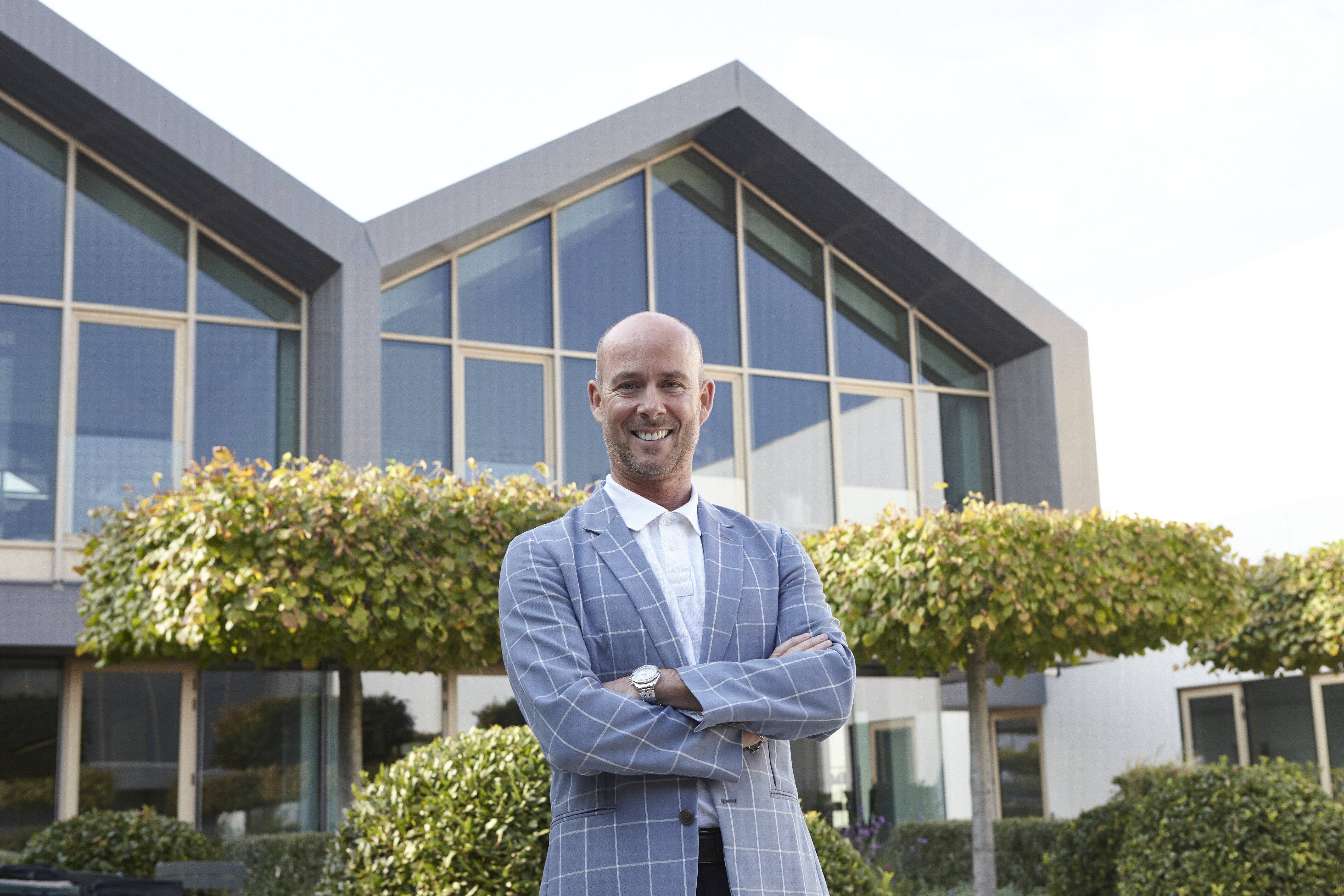
We sit down with Davines Haircare’s Global General Manager Mark Giannandrea to hear how to survive, and thrive, also in a market downturn.
Giannandrea (pictured) has been through many recessions, but has never seen a time when countries have such an economic divide between those who have and those who don’t.
– And that’s affecting the professional haircare business. In March, we saw approximately 200 hairdressers march on the British parliament to try and find a way to reduce the VAT that the UK is putting on small businesses, he shares, continuing,
– It’s becoming almost impossible to manage a business and train people to get them ready for the next stage. People are not coming into the industry as frequently as we used to see. It’s not seen as glamorous or a pathway to success, because you don’t see a lot of it on social media. Particularly, young men are not coming into it as much. I was in Madrid this spring with 70 of our team from around the world. There were 2 guys. The rest were all women. When I asked some of the team responsible for hiring, they said, ’We would love to get some guys in, but they just don’t apply for these roles.’
– I find it quite sad. Particularly knowing what I know about the industry. I started off carrying a bag, literally on the floor, going from salon to salon. And then, before you know it, I get to travel the world. I’ve lived in many different places, and I’ve had a fantastic career. I just don’t understand how people don’t see this.
How can you as a brand help your clients and partners in these challenging times?
– The industry is quite divided from a manufacturer’s perspective. Where the money is today is on retail and shampoos, conditioners, treatments. When you see it from that category perspective, and then you see it from the channel perspective, where the growth is coming from is online. So, all the manufacturers are investing in that part of the category and then focusing on the channel, which is the ecom site, growing more and more B2C.
– We, as a company, have just launched a new colour range called Present Time, which has been four years in the making and was a little baby of mine. One of the main reasons why we’ve really dialled it up was to get more investment behind it and dial up the services. The salons need services. They don’t need another bottle of shampoo. They need ways of being able to maximise their education and skills, the consultation skills and colouring skills, but also bring a different level of service to the client. That’s what we’re doing, trying to push into the marketplace that there is an opportunity to get more people into the chair, dial up the services, and get more cash on the table.

It’s never been more crucial to get a good reason to visit your local hairdresser.
– Right now it’s incredibly important. You need a reason to come and visit, and you need a reason to keep coming back.
Similar to beauty brands, they need repurchasing.
– Yes. Every time I go into a market, everyone says, ’My market’s different.’ But hairdressing salons around the world are all exactly the same. From Japan to North America, to the Nordics, to Australia, we need 3 things. We need to get people through the door, get them to spend more money whilst they come in through the door, and get them to repeat appointments quicker than they would normally do.
– What we’re trying to do with Present Time, and the way that we present it, is exactly that. It looks cool. The colours, by Tom Connell (Davines’ Hair Art Director, Ed’s note), are all very high-fashion colours. And we’ve presented it in such a way that it’s accessible hair. It’s not gorilla fur black with a fringe, but beautiful women wearing beautiful hair, to get more people through the hairdresser’s door, get them to spend more, and get them to repeat appointments. If the service is done well, they’ll wanna come back.
At the same time, many people have never had less money, so it might sound like a contradiction.
– It is a contradiction, but there is ’lipstick luxury’ when things are tough, right? And, you’re not spending a fortune. You’re investing in yourself to make you feel better. And that’s what beauty is all about, not just hairdressing; make yourself feel good when things are not so good.
And the economy is always going up and down, so now is the time for a salon to gain market share.
– Yes. As I said, the industry is tough. The last couple of reports that I’ve seen are that every single region around the world, apart from Australia, has shown a decline in the number of hairdressing salons. That’s scary. But the number of stylists is actually remaining flat or, in some cases, increasing. So, where are these people going? They’re doing home hairdressing, opening a little shop in the back of the garden. They’re looking for quick services, reducing the experience, making it more accessible, but unfortunately, it doesn’t necessarily ensure the quality of good hairdressing and the educational skills that the manufacturers or the associations can support with.
So, while the salons are becoming fewer and fewer, those that remain will hopefully be more profitable.
– Yes, the idea to weather the storm is to continue to focus on service and client retention, because when you come to a salon, it’s an experience, with all the different services that are available, says Giannandrea. He continues:
– Last year, we launched Naturaltech Tailoring, a personalised service that takes 30 seconds and can be done with the Japanese headspa. It’s only available in salons. You cannot get it anywhere else. We try to think about how we best support the stylist. I’ve been in this industry for quite a few years and worked for many different companies. Many of them talk about how to increase the top line and improve the bottom line. We’re talking about how we can support the industry. It’s a very different approach.

Professional is more important for you, but you’re still available at retailers. What’s your view on the competition between the two?
– It’s important to be where the shopper shops, so it’s very important to be where the consumer is, to be able to present the brand and brand purpose. That’s one of the key drivers. If the consumer chooses to shop online and only shop online, that’s entirely up to them, so we have to be available. But we don’t discount, and we don’t do any heavy promotions, so the price is the same online as it would be in store or in the salon.
– We also use it as not just from a brand purpose perspective, but as an education tool. Whenever we deal with certain e-tailers, we use it as a way to educate the consumer too—about our brand, not just about the purpose—and what our brand values are. That’s why it’s very important not to play with all of the etailers but a selected few in each market, and work together on content which is approved.
And brand building is also beneficial for your salons and partners.
– Yes. In certain markets, we have stickers on the top of the ecom portfolio that say, ’If you love our products, you’ll love our salons.’ And there is a QR code at the top of it that the consumer can click on, and it takes them directly to the local market’s salon finder. We’re trying to do everything we can in order to keep flowing that through, and quite a significant part of the profit that we make from that channel flows back into the salon environment.
While you’re saying you’re not working with discounts, a vast part of the e-tailers’ business is campaign-driven. What’s your view on all the campaigns?
– No retailer in the world wants to discount, because all they do is reduce the margin. The reason that the discount is is because the manufacturer or the supplier does a promotion for them to take volume. We don’t do that. If you’re a retailer or an e-tailer and want to buy from us, you buy it at the regular price and maintain the margins. The only ever time we do promotion, once or twice a year maximum, is through GWPs (gift with purchase). If there are any discounts, it’s very difficult to pull them because it’s Recommended Retail Prices at the sole discretion of the retailer. If there are any discounts, it’s done purely by them, and they’re reducing their own margin, which they don’t want to do.
Do you have any good examples in terms of salons that work in an innovative way, that can be a role model for others?
– In the north part of England, there’s a hairdressing salon called Sarah Lancaster, and her pricing is very different. She’s charging by time and not by service. She didn’t have a price list for foils, colour, semi-colour, or blow-dry, but a price per person and time spent, which I found quite interesting. It then put the emphasis back onto not the product or the service, but the skill set and the level of the individual, which I thought was cool. That salon is also one of those that, when you walk into it, you feel there’s an energy there.
Davines continues to push the sustainability bar. According to Giannandrea, the company tries to bring the sustainability direction and the business as close as possible together.
– I don’t want to use the term ’commercialising the sustainability,’ but it’s about how to bring all of the activities that we do—and we do a lot, probably far more than is acceptable to execute properly—closer to the business. So that, when we do activations in the markets, in the salons and the channels, the consumer gets to see it.
– Sustainability is not easy for the consumer to absorb fully. For example, when we started dealing with Rodale (Institute, an agricultural research and education nonprofit) and set up the EROC (European Regenerative Organic Center) project together, I thought, ’How on earth are we going to bring this into the business, talking regenerative agriculture and teaching farmers how to look after the soil?’ How are we going to bring this into a beauty environment?
– But Davide, being Davide (Bollati, founder), was already light-years ahead. And, how it’s manifested itself within the business is that next year, we’ve got something very exciting happening with the Essential Haircare line. We will be relaunching and repositioning it with new ingredients and new fragrances, which will be linked to, and grown through, regenerative practices (a holistic approach to land management that focuses on restoring and enhancing the soil health rather than just maintaining the status quo).
– We’re using this now as a way of being able to educate the consumer of what regenerative agriculture is and how important it is in helping to reverse climate change, so that they can make other informed choices about how they spend the money on various other things. Davines plays in the professional hair care and beauty industry, but we’re an ideas company, and we have lots of them. Some are great and some are not so great, and some will never see the light of day, but this is one of those I feel very honoured and proud to be part of.
– There is a movement across not just beauty but various different categories, including food. McCain, a frozen food company, is now talking about the potatoes being organically grown through regenerative practices, which they have been doing for the last couple of years. There are more and more companies starting to really think about how they are positioning their product or their brand, which is in line with helping to focus on climate change.
Do you get requests about how you work from other beauty companies as well?
– Funnily enough, not so many beauty companies, but lots of other companies. I can’t share who, but there have been a lot of companies that even commissioned us to do some studies. And I’m talking big companies. It gives me hope.
Another rising topic is degrowth, which can obviously be challenging for business owners aiming to see their company grow. Have you looked into it?
– I’m glad you brought this up, and I’ve got goosebumps as you’ve mentioned this. I take the whole team, including Davide Bollati, off-site once a year. We sit down, throw big topics around, workshop them, talk and debate them, and, if they are of interest, we narrow them down and put them into our strategy for the coming year. One of the conversations, about 18 months ago, was around, ’What if we were to stop growing next year?’ Consolidate, level everything off, take a step back, and focus on investments in key parts of the business that don’t fundamentally bring growth for the following year or the year after that. To really help settle the foundations.
– That has been on the table for quite some time. Our biggest benefit is that we’re a family organisation, so if we were to do that—and we can do that—we don’t have to ask for shareholder permission. We don’t have a gun to our head; all we have is our own personal ambitions around the board table. So, whilst we still see opportunities to grow, we have started to invest differently, other than just growth for growth’s sake, if that makes sense. Without going into too much depth, we’re not expecting or budgeting to have the same growth as we’ve had for the last few years. Through choice.
So it has nothing to do with the challenging times?
– Well, yes and no.
If you’re cynical, it could have been timely.
– We’re continuing to invest, but we’re investing in areas where it doesn’t bring immediate growth. What we’ve done in the past is invest in markets, channels, or infrastructure. We will have a new subsidiary next year, taking over Spain from a distributor. We never change distributors very often. This one had been with us for over 20 years as one of our first distributors, and unfortunately, he died a couple of years ago. The business was left to the family, and there are lots of family members involved in it, so we are taking it over, not renewing the contract, to ensure the financial security of the whole family.
– So, these are the things that we’re investing in. That doesn’t necessarily bring growth, because we’re going to stabilise the business, stabilise the community. And, as I said, the business is tough. We have options for what we should do in that market. In theory, we could have another distributor and push them to grow, but that wouldn’t be the right thing to do, ethically.
Finally, where are we heading for professional hair care? Any reason to be optimistic?
– I hope to God there is, says Giannandrea.
– Unfortunately, I’m not envisaging a big turnaround in the next 12 months. I see a continuation of big manufacturers continuing to divest out of the traditional professional channel. Because it’s hard, it’s costly, and they’re all under tight focus to grow their margins and the top line, so they will continue to focus on the ecom side of the business, which actually is a shame for the industry because the industry misses out on education.
– They’re not invested in education because it’s costly. So they focus on where it’s the return, but what happens is that the industry suffers. I still think of ourselves as a challenger brand, even though we’re quite big. We posted results at the end of 2024, turnover €295 million, which is significant. But we still have the challenger mindset, we’re continuing to invest in services, in education, in shows, in community events, trying to rally the industry together in all of the 92 different markets that we’re in.