
In a typical Scandinavian collaborative manner, beauty entrepreneurs Hanna and Johan Olzon Åkerström are not only implementing circular principles into their full value chain. They’re also eager to share the lessons learned with their industry peers to accomplish even bigger change.
For more than a decade, Zurich-based husband-and-wife duo Hanna and Johan Olzon Åkerström have offered natural products, made in ecologically sound ways, for their own skincare and personal care brand Soeder. Now, they’re witnessing first-hand how essential oils and natural scents are really taking off – ’they’re actually thriving!’ – as consumers seek more authentic, simple, and sustainable products. Using completely naturally derived ingredients in their soap-making provides an alternative to the products that currently dominate the market, which predominantly feature synthetic additives.
– We started our soap-making journey by experimenting with formulas in our kitchen. Now, a decade later, we’re setting a new global standard for what consumers can expect from brands in terms of environmentally safe production processes and transparency, the duo explains.
How?
– Using 100% natural ingredients in all products still remains a rarity in the beauty industry today. We’ve also made palm oil-free soap a priority, recognising that many products rely heavily on palm oil. Our focus also extends to conscious sourcing, partnering solely with suppliers who share our ethical values and commitment to sustainability.
– We believe in full transparency at every level of our operations, from rigorous traceability of our raw materials to adhering to strict certifications like ISO 14001 and Natrue. By sharing our journey and the stories behind our ingredients and processes, we hope to inspire innovation across the industry toward conscious practices.
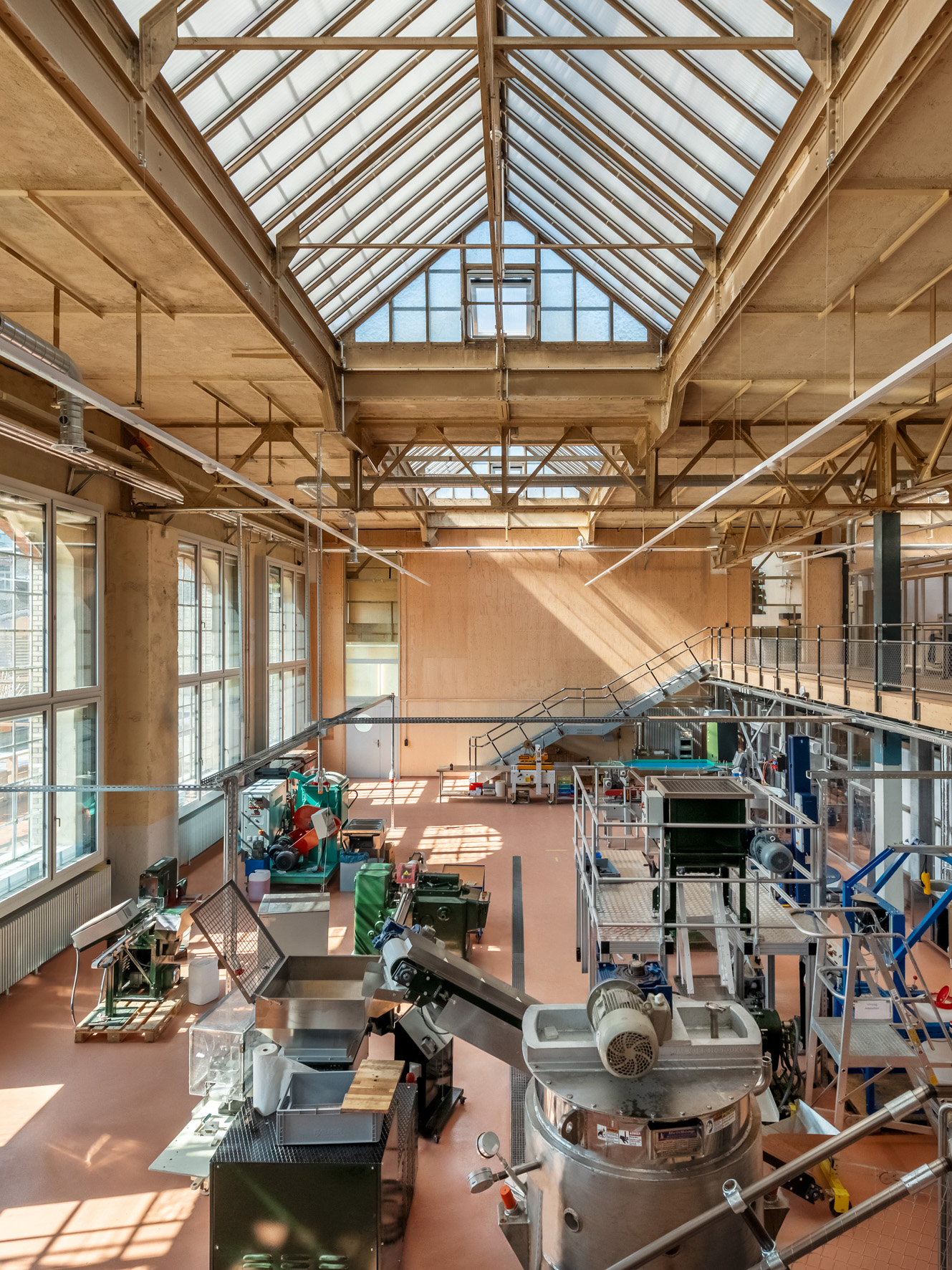
Located in the historically protected Werkstadt Zürich—a former Swiss National Rail building—in the heart of the city is Soeder’s brand new 2,000m2 factory (pictured above). It’s designed to reduce carbon emissions, improve energy efficiency, minimise waste, and harness and reuse energy from the soap-making process, with the goal of becoming energy-positive in just a few years.
– The factory’s open-plan design echoes the transparency of our brand, sharing the entire production process. One of the highlights is a glass room where you can watch our all-natural soap-making process in action. We’re now introducing a Visitor Concept at the factory, allowing visitors to tour our facility and engage directly with our production process. This glimpse behind the scenes, revealing the manufacturing processes and the natural ingredients, is a step we have made to shift the industry toward greater transparency.
– The new facility also represents a homecoming for local production, and by maintaining complete control of the manufacturing processes and our product ingredients, we can ensure the highest quality and minimise our environmental footprint at every stage.


What are the next steps toward becoming energy-positive in your facility?
– Right now, we’re harnessing the energy generated during the saponification process through a heat recovery system using water and redirecting it for use in other stages of our production cycle. We aim to not only meet our energy needs sustainably but also, looking ahead, we will produce more energy than we actually need for our production. To make sure none of this energy goes to waste, we plan to connect our system to the Main Building Heat Recovery System and give the surplus energy back to the building and the city of Zurich.
Refillable packaging is a crucial step toward reducing single-use waste and promoting a circular economy in the beauty industry. Approximately 50% of Soeder’s turnover comes from refill sales. Hanna and Johan believe that the brand’s special refill strategy will continue to be not only relevant but also profitable in the future.
– We’re actively promoting this circular economy by making refills a standard practice. Our network of refill stations continues to grow, and we’re introducing solutions for various industries, including hospitality and even aircraft. By making refills more accessible, we’re reducing waste while ensuring that our products remain both environmentally and economically viable for a wide range of customers.
– Creating sustainable refill systems not only enhances customer loyalty but also aligns with the growing consumer demand for eco-friendly products. To see this model grow, companies need to invest in innovative designs that make refills easy and accessible for consumers, as well as educate them on the positive impacts of their choices.
– The system that supports our refill model, including client training and our extensive network of refill stations, is crucial to our success. It’s essential that the refill option provides real benefits. Customers will recognise if the refill options are not a better choice than new products. It’s also crucial to ensure that everything related to refill products, such as packaging, is of the highest quality to be at the forefront of the ‘refill revolution’ and drive meaningful change.
What have been the biggest challenges when working with refills?
– Creating a system that is simple and user-friendly. If the refill process is complicated or inconvenient, people simply won’t use it. We’ve built a strong network of refill stations that are working well, and we’re continuously improving accessibility. For us, it’s crucial to have refill stations in locations where customers are, which is why we’ve focused on high-traffic areas like train stations.
– The demand for refills has steadily increased over the past 8 years. In fact, we’re now selling more refill bottles than filled ones. We are witnessing first-hand how people are becoming more aware and how they’re actively seeking out ways to reduce waste, which is why refill options are becoming so popular.
– We’re working on making the refill process even easier and cleaner with a new system we’re currently testing with a selection of our customers. Once we’ve refined it, we plan to roll it out in our refill stations and make it available to hospitality customers. It’s all about creating a seamless experience that encourages more people to make sustainable choices.
Soeder’s circularity work also includes upcycling waste side streams and transforming them into resources, such as innovative packaging materials. They also have a program to collect unused bar soaps from hotels, which can be easily recycled into new products.
– Our zero-waste strategy means we’re rethinking our entire production process to minimise waste at every stage. One of our primary goals is to achieve a net-zero footprint by 2026. Central to this commitment is our focus on energy efficiency through solar power and advanced energy recovery systems at our factory. In addition, minimising waste and ensuring our materials are ethically sourced are other core values. We also regularly assess our practices so that we can innovate.

The brand has just onboarded a new distributor in the U.S. to further enhance its international presence, implemented a new store concept at its Zurich flagship, and opened a dedicated shop-in-shop at KaDeWe in Berlin. Soeder also launched a collaboration with design brand Vitra and its VitraHaus—the flagship store and home to the Vitra Home Collection at the Vitra Campus in the south of Germany—for the launch of the natural soap EVER GREEN.
– Together with Vitra’s Creative Director, Till Weber, we visited the Campus gardens to explore the diverse flora, the duo explains. These visits and discussions inspired us to craft a subtle fragrance that combines fresh notes of mint and citrus with the warmth of patchouli, balanced by the herbaceous scent of laurel. The soap aligns with our commitment to sustainability, made from organic plant-based oils using the traditional saponification method.


Given that the average person in developed economies washes their hands at least five times a day and uses skincare products daily, the Soeder duo states that more responsible personal care consumption can make a positive change.
– We envision a future where natural, clean, and sustainable skincare is the standard, not the exception. In a crowded skincare market where many brands claim to be eco-friendly, we aim to disrupt the status quo, and, ultimately, cleanse the industry of unethical practices—and to create a ripple effect that inspires other brands and customers alike.