
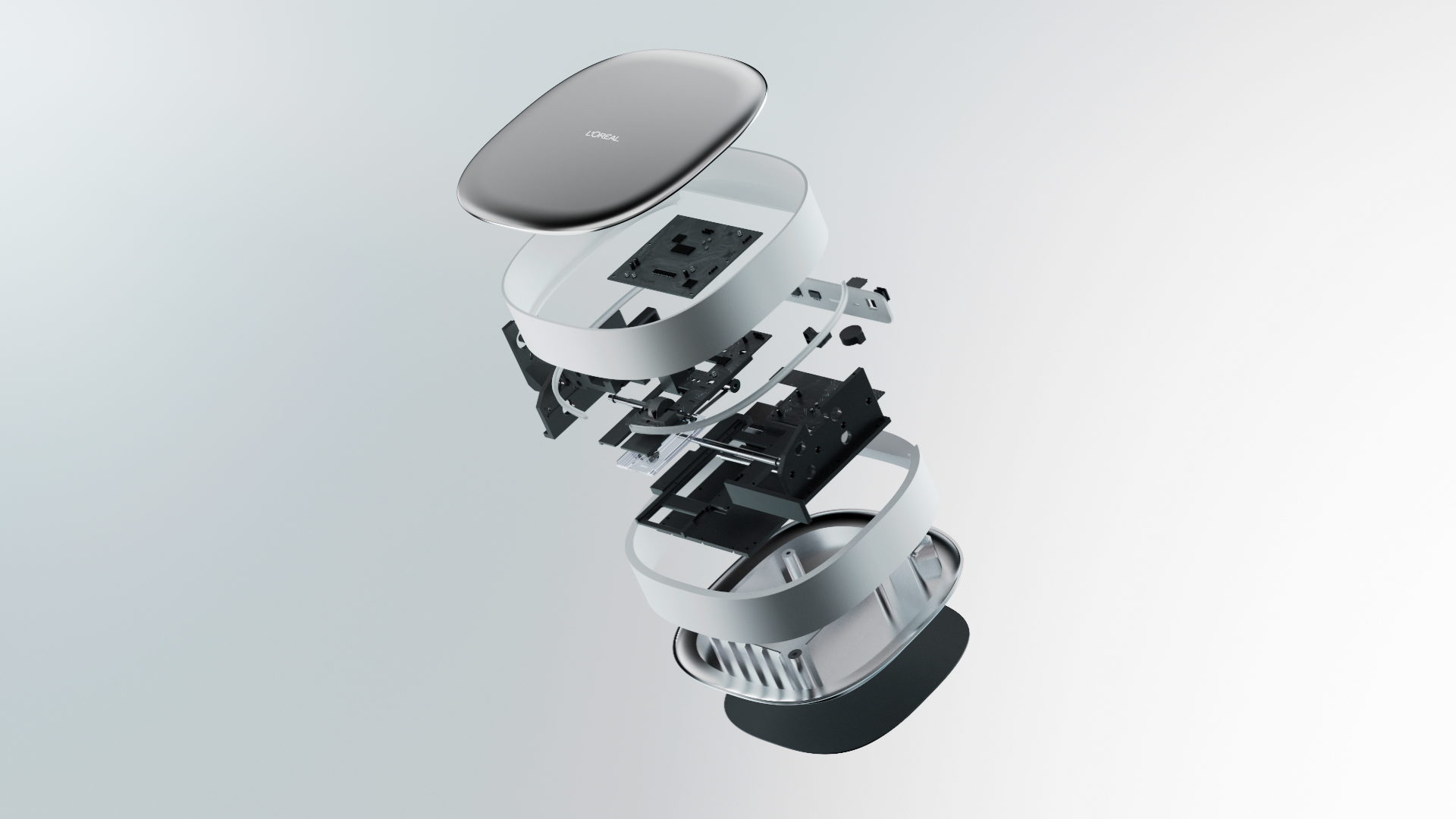
Teaming up with Korean startup to produces a personalised skin assessment in minutes.
According to a recent US survey of 2,000 skincare users, nearly 80% reported relying on trial and error to determine what worked for them, with the average person reporting trying seven different cleansers before finding one they love. And the growth of the global skincare market, projected to reach €119 billion in 2024, is driven by consumers who are continuously seeking more information about, and more efficacious products for, their unique skin.
The recent rise of personalised skincare recognises that each person’s unique skin is influenced by factors such as genetics, lifestyle, and environment. During the leading tech event CES in Las Vegas, L’Oréal Groupe unveiled L’Oréal Cell BioPrint, a tabletop hardware device that promises personalised skin analysis in just five minutes. It’s using advanced proteomics – the study of how protein composition in the human body affects skin aging – and has been made possible by what L’Oréal calls Longevity Integrative Science. This approach reveals how mechanisms in the human body can affect skin’s appearance.
In a partnership with Korean startup NanoEnTek, L’Oréal Cell BioPrint’s super-fast, personalised skin assessment includes information about skin’s biological age, and how fast it’s aging. The tool can calculate skin’s age and provide personalised advice on how to slow down the appearance of aging. It also looks at ingredient responsiveness: Will certain active ingredients work on one’s skin? L’Oréal Cell BioPrint shall minimise guesswork by helping to predict responsiveness to certain key ingredients such as retinol. Lastly, it’s about shifting from reactive to proactive skincare. Is one’s skin prone to dark spots or enlarged pores? L’Oréal Cell BioPrint can help predict potential cosmetic issues before they become visible, enabling users to take proactive steps to help protect the beauty of their skin.
– Cell BioPrint is an exclusive microfluidic lab-on-a-chip technology and with the device, we offer people the ability to discover deeper insights about their skin through specific biomarkers and to proactively address the beauty and longevity of their skin, says Barbara Lavernos, Deputy CEO in charge of Research, Innovation and Technology at L’Oréal Groupe.

L’Oréal’s Advanced Research team has spent the last few decades on knowledge-building and innovation. For the first time, it’s now identified unique biomarkers in the skin that can indicate key components of healthy-looking skin and longevity. The L’Oréal Cell BioPrintdevice also features NanoEntek’s microfluidic lab-on-a-chip technology, which leverages some of the Korean company’s 100+ patents to measure the presence of L’Oréal‘s mentioned protein biomarkers in five minutes, through a simple, non-invasive process:
- Put a facial tape strip on one’s cheek, then place into buffer solution.
- Load the solution into the L’Oréal Cell BioPrint cartridge and insert it into the machine for analysis.
- While L’Oréal Cell BioPrint processes the sample, the Skin Connect device takes several images of one’s face and a short questionnaire about skin concerns and aging is completed.

L’Oréal Cell BioPrint is scheduled to pilot with a L’Oréal brand in Asia later in 2025.